House of Codesign was founded in 2018 to facilitate innovation and enable large organizationsto accelerate their digital and environmental transformations. In line with these values, the company itself is deeply committed to protecting the planet and has implemented numerous virtuous initiatives. CASTALIE proud to have been supporting them since their inception! We spoke with Laurie Soares, Digital Communications Manager and Office Manager at House of Codesign, and Eric Lemoine, CEO and expert in innovation and design thinking, about their DNA and their relationship with CASTALIE. An interview that was as enriching as it was inspiring! 🌿🌎
Can you describe House of Codesign in a few words?
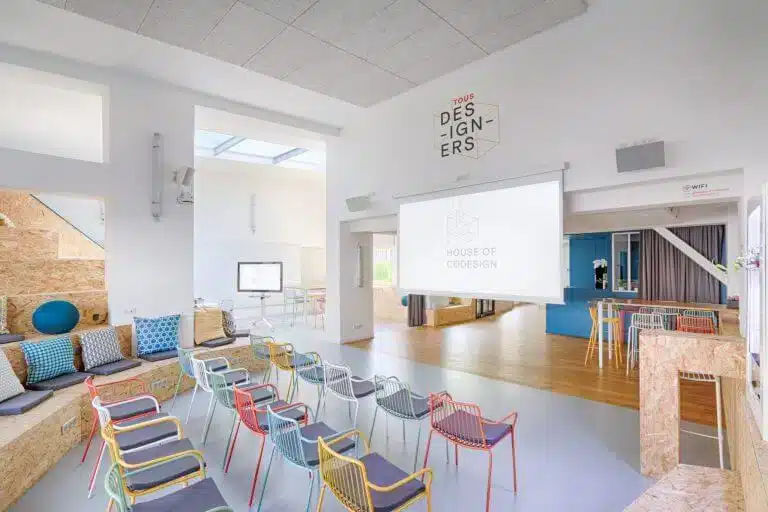
Laurie Soares : House of Codesign (HOC) was created in April 2018 to respond to a need: to show that another kind of business is possible. We can no longer work against people and the planet, so we need to rely on technology andcollective intelligence. We have two major programs to take concrete action on digital transformation and, soon, energy transition. We use a unique methodology that puts the user experience at the center of everything we do to solve problems. We make sure that the people who come here understandthe challenges of transformation and work together to build solutions. Our space has been designed to make it easy for people to communicate and exchange ideas. For us, it was essential to have this aspect of the environment in the transformation.
Eric Lemoine : To sum it up in a single sentence, our job is to facilitate innovation in large companies and accelerate transformation. That's what we do every day. We needed a place where we felt at home, because our experience in other places wasn't satisfactory, as they didn't share our values! When we had three huge bags of waste to throw away at the end of our workshops, something wasn't working.
So we designed a space that best suits our way of working, with an environmental approach that we manage ourselves: from sourcing caterers to purchasing, energy supply, biodiversity, and more. We tried to tick all the boxes that we felt were important for a responsible ecological approach and, above all, comprehensive approach: we do these things because we believe in them, not for the sake of our image. We wanted to be consistent with who we are and what we stand for.
How many of you work at HOC?
E.L : There are about ten of us, but we receive groups of 10 to 25 people every day, particularly from large companies.
When did you install CASTALIE HOC?
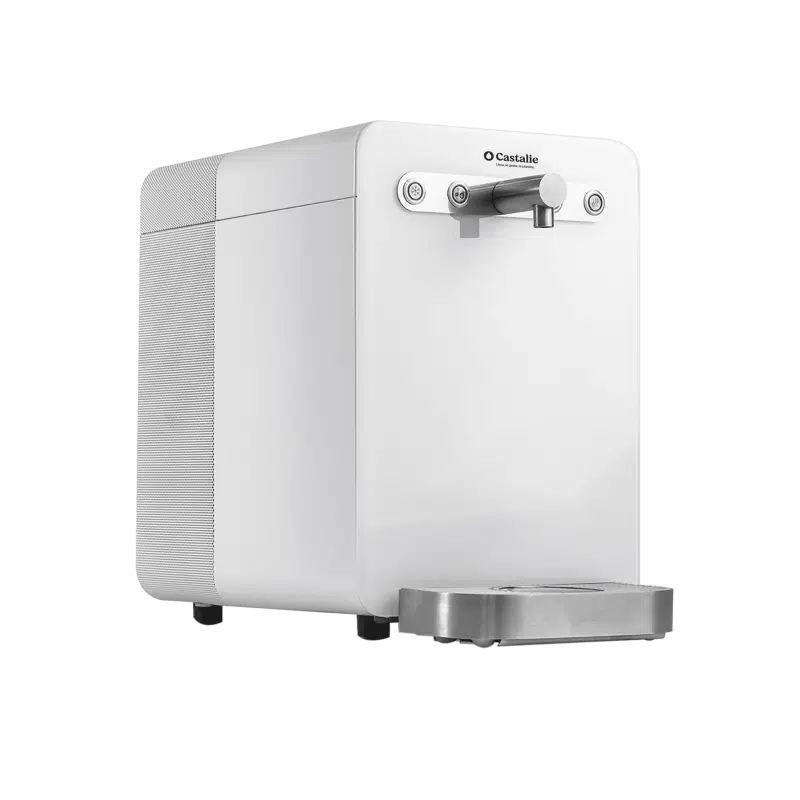
E.L : We have had aCASTALIE water fountain CASTALIE day one, i.e. since April 2018.
How did you hear about our brand?
E.L : We got to know him through our restaurant, Daroco, which we used to go to very often and which served CASTALIE water. I also saw lots of posts about him on LinkedIn and saw how the company was evolving, its projects, its success... We said to ourselves, "As soon as we have our own place, we'll serve CASTALIE! CASTALIE
We highlight our entire approach to water on our website and in our presentations. There is a carbon issue involved in not transporting liters of water around the world, plastic packaging, cups, etc. It goes beyond the plastic aspect. The real issue isthe carbon footprint of transporting water.
Why did you choose CASTALIE
E.L : We chose CASTALIE reduce our environmental footprint. This allows us to see that in the first year, we saved nearly 8,000 bottles of water!
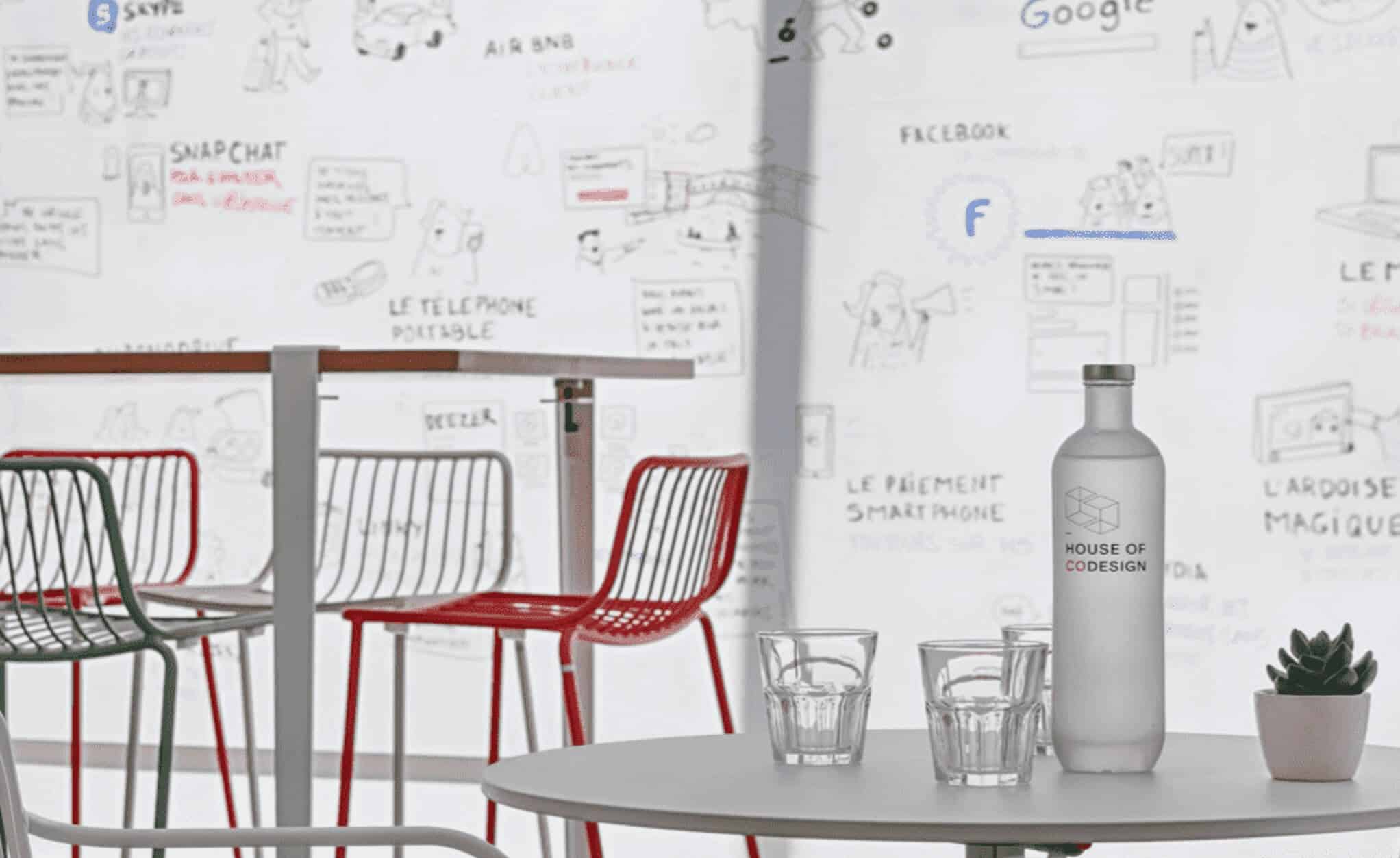
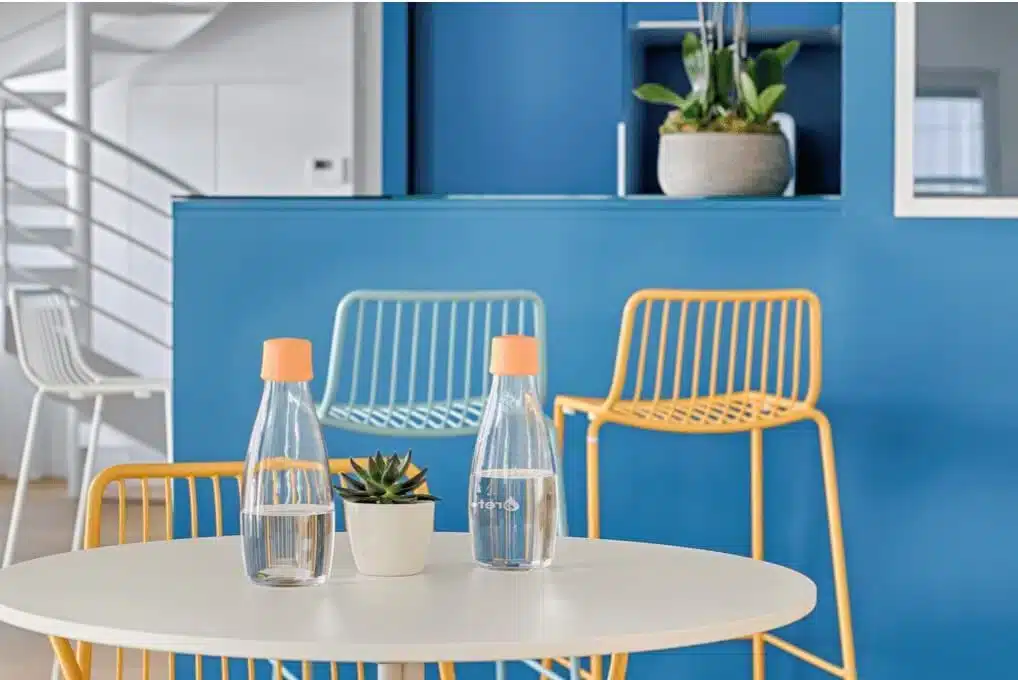
As soon as participants arrive, we give them a Retap glass water bottle with a small label on which they can write their name. They keep their bottle with them all day so they can refill it at the water fountain.
What kind of fountain do you have?
E.L : Our water fountain is the Mini Pure, which offersstill and sparkling water in 0.2 L and 1 L bottles.
In terms of containers, what do you offer?
E.L : So we have water bottles, but also glass bottles. We also have glasses, which are not personalized. But we don't have any plastic containers or coffee capsules. It's a comprehensive approach. In the morning, all the bottles are lined up with the labels stuck on, and we explain to participants that they will have the fountain at their disposal all day to serve themselves directly.
Does CASTALIE your business challenges?
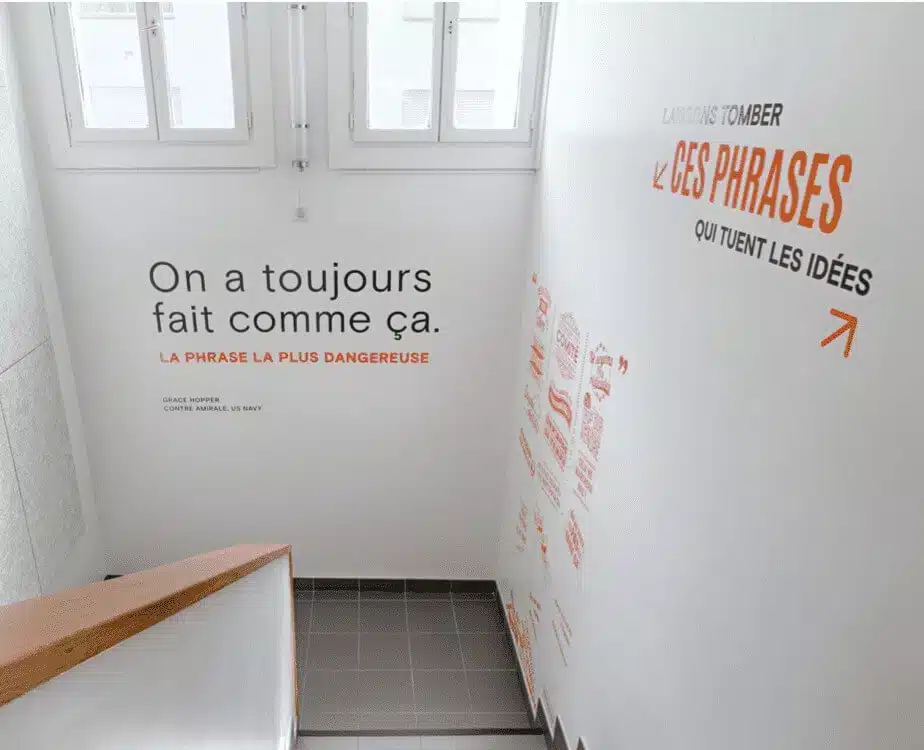
E.L : Yes, because we want coming to our restaurant to be an experience. And offering our customers the option of hydrating themselves in an eco-friendly way is already an experience in itself. There's no waste, no small bottles on the tables... Even if it's a change, it's generally very well received. The first thing you see when you arrive at our restaurant, on the way up the stairs, is the phrase "We've always done it this way," the most dangerous phrase in the world. We don't want to be part of that normality and we want to break the rules. The small water bottle or the six-packs of water in the kitchen are not for us.
Are you satisfied with CASTALIE Is it an initiative that is well received by your employees?
E.L : Oh yes, we love them! In terms of logistics, we mostly use individual water bottles rather than glass bottles. When we first set up House of Codesign, we thought it might be a bit of extra work, but in the end it's no big deal—we just put the water bottles in the dishwasher and that's it. It's not an issue. It's exactly what we wanted.
How did you approach your CSR strategy?
E.L : Our CSR approachwas conceived when HOC was first created. From the moment we imagined the place, we wanted to make this approach part of our DNA:
- on renewable energy supply
- by installing a green roof to maintain biodiversity
- by managing all the waste we produce (water, coffee, etc.)
- by choosing the right caterer, who ensures short supply chains, seasonality, and organic produce for our customers
- by installing a beehive to give a jar of honey to each of our visitors
- by installing a barometer to demonstrate what aquaponics is and the concept of an ecosystem
- by choosing eco-friendly web hosting.
It has been part of the project from the outset. Let's imagine that our footprint is 100. How can we reduce it to 10? I think that today, there isn't much left to cut back on, except for certain purchases that still go through Amazon... That's the last thing we have left! It's our little weakness.
As for what remains to be done, the transportation of our employees and customers, we try to do our best: when they take a taxi, a plane, or other means of transportation, we implement carbon offsetting. For every visitor who comes to our company, we plant a tree in Indonesia thanks to a great local program with the Trees 4 Trees foundation. Trees 4 Trees. It allows for carbon offsetting while supporting farmers, their families, and the local community. It has a strong social impact. We've planted 3,000 trees in two years!
What actions would you like to implement in the future?
L.S : Set up a compost bin, especially for coffee grounds. We also have plans to open a rooftop space, which would give us the opportunity to set up a composter for all our organic waste, coffee grounds, etc. At the end of our workshops, we offer participants doggy bags so they can take their leftovers home with them and avoid waste as much as possible.
E.L : Now that we have thoroughly worked on the zero-carbon approach, we are going to launch our Carbon Hack program to help our customers reduce their carbon footprint and decarbonize their activities. It's an ambitious offering that relies oncollective intelligence and communities: we are targeting companies and employees who are already convinced and want to take concrete action now. It will be launched in the coming weeks....
Text: Jeanne Favas
Credits: House of Codesign