Introduction
In recent years, the environmental impact of single-use cups has been the subject of much debate. Between plastic, criticized for its pollution, and cardboard, often perceived as an eco-friendly alternative, it is easy to get lost in the promises of sustainability. Following the documentary "Sur le Front" (On the Front Line) on Monday, September 16, on France 5, the real impact of cardboard cups has been called into question, raising an essential point: cardboard is not always as eco-friendly as it seems.
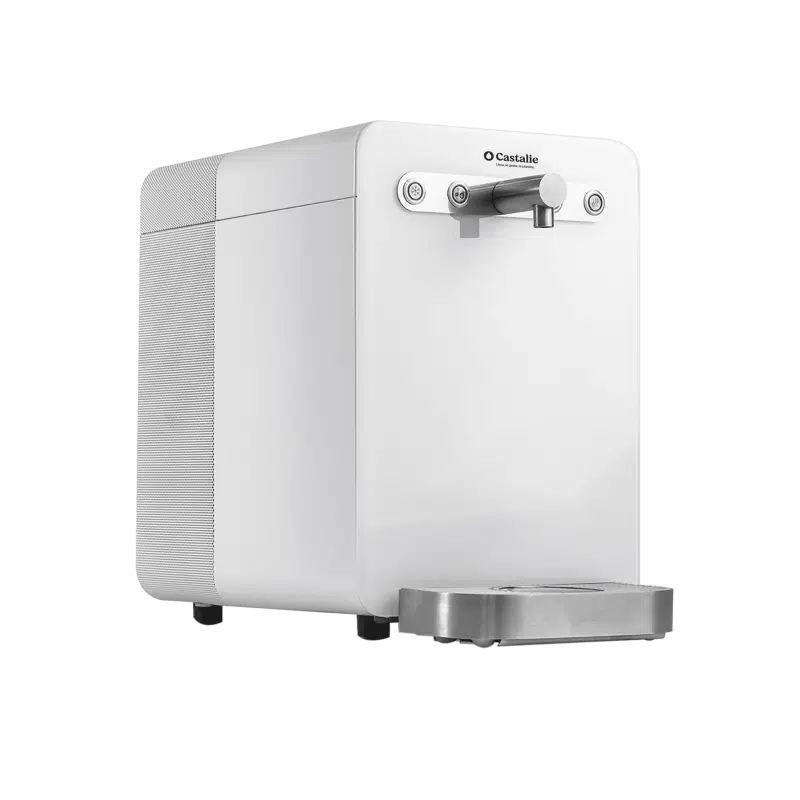
We are very proud that our partner Auum appeared on the TV show "Sur le Front." Its founder, Clément Houllier, met with Hugo Clément and presented his solution. Like Auum, Castalie is part of this sustainable and innovative approach, offering an effective alternative to single-use cups and bottles thanks to its micro-filtered water fountains. By adopting such a solution, it becomes possible to reduce plastic waste and better protect natural resources.
💡 Did you know? According to some estimates, more than 500 billion single-use cups are used worldwide every year.
Single-Use Cups: A Major Environmental Problem
Plastic cups, widely used for takeaway drinks, have become a symbol of modern pollution. Every year, around 264 billion plastic cups are consumed worldwide, and the vast majority end up in landfills or oceans. Their recyclability is extremely low, with a recycling rate of less than 1% in many countries. This means that a large proportion of these cups are incinerated or discarded, contributing massively to global plastic pollution.
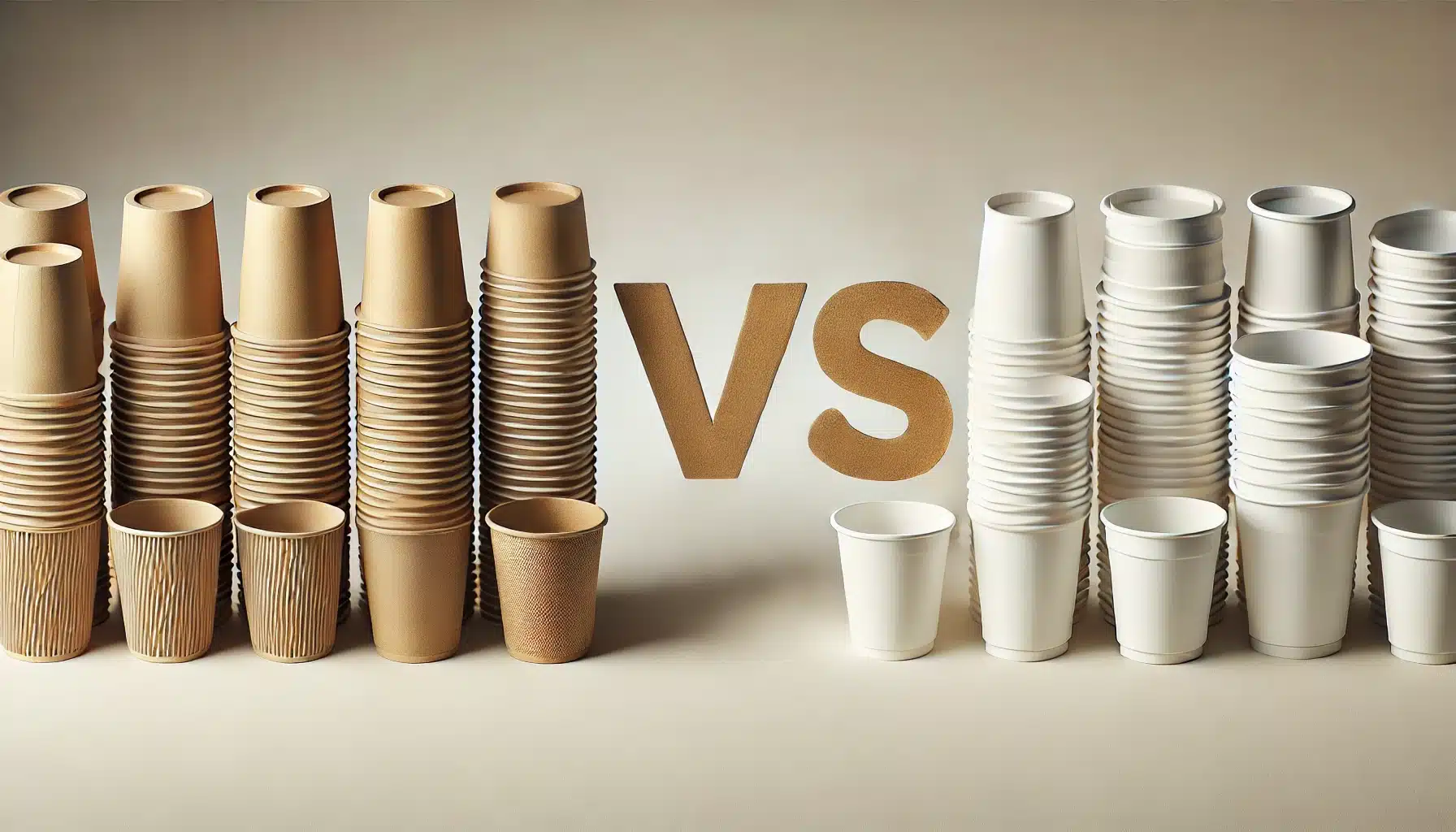
Faced with this reality, paper cups have been proposed as a more environmentally friendly solution. However, they are not without their problems. Behind their "natural" appearance, many contain a thin layer of plastic to make them waterproof, which makes them considerably more difficult to recycle. According to some studies, less than 30% of paper cups are actually recycled, as the process of separating the plastic from the paper remains costly and inaccessible.
It is in this context that alternatives such as micro-filtered water fountains without bottles stand out. These fountains significantly reduce the use of single-use plastic cups and bottles, replacing them with reusable water bottles or glass bottles, while providing pure, high-quality water directly from the mains.
Paper Cups: A Bad Idea?
The perception of paper cups as an eco-friendly alternative is often based on a misunderstanding of their actual composition. Although cardboard is the main material, most paper cups used for hot or cold drinks are lined with a thin layer of plastic. This layer, often made of polyethylene, is essential for making the cup leak-proof, but it also complicates recycling, as it is difficult to separate the cardboard from the plastic during waste processing.
In terms of carbon footprint, paper cups are not necessarily more environmentally friendly than plastic cups. Their production requires a large amount of water and energy. According to product life cycle studies, the production of a paper cup can require up to three times more water than that of a plastic cup. Transporting the raw materials needed to manufacture these cups also generates significant CO2 emissions, making their carbon footprint far from negligible.
Rather than choosing between plastic and cardboard, the real solution lies in rethinking the way we consume water. Micro-filtered water coolers without bottles, such as those offered by Castalie, provide a responsible alternative. They reduce both single-use packaging consumption and overall environmental impact, while guaranteeing high-quality water.
Life Cycle Assessment (LCA): Comparison of Hydration Solutions
Life Cycle Assessment (LCA) is a method used to measure the overall environmental impact of a product, taking into account each stage of its life: from raw material extraction, production, and transportation to end use and recycling or disposal. When comparing plastic and paper cups, LCA reveals some surprising truths.
For a plastic cup, the most polluting stages involve the production of raw materials, particularly polyethylene or polystyrene, which are derived from petroleum. The greenhouse gas (GHG) emissions generated by the production of a plastic cup are significant, but there are also emissions linked to their transport and end of life, as the majority of these cups are not recycled.
Cardboard cups, although they seem to be a better alternative, do not fare much better on the environmental scale. Indeed, the LCA of cardboard cups shows that their production is particularly resource-intensive, particularly in terms of water and energy. According to several studies, a paper cup can produce up to 60% more CO2 than its plastic equivalent when the entire production and distribution chain is taken into account. In addition, as recycling of paper cups is often limited, they also end up in landfills, where they take several decades to degrade.
Beyond the debate between cardboard and plastic, the solution lies in reducing the production of single-use cups. This is where micro-filtered water fountains without bottles play an essential role. By eliminating the need for disposable cups and bottles, they not only reduce the carbon footprint but also save large amounts of natural resources, including water and raw materials.
Castalie A Solution That Reduces Environmental Impact
To truly break this ecological deadlock, Castalie a sustainable and innovative solution: micro-filtered water fountains without bottles. Unlike traditional systems that require single-use bottles or cups, Castalie fountains Castalie to drink water directly from the mains, while guaranteeing optimal quality thanks to advanced filtration systems.
In termsof Life Cycle Assessment (LCA), the difference is significant. Castalie water fountains, for example, emit nine times less CO2 than plastic bottled water over their entire life cycle. This figure includes not only the reduction in plastic waste, but also the reduction in water resources and land use. By choosing this solution, businesses and public spaces can avoid using millions of cups and bottles each year, while reducing their environmental footprint.
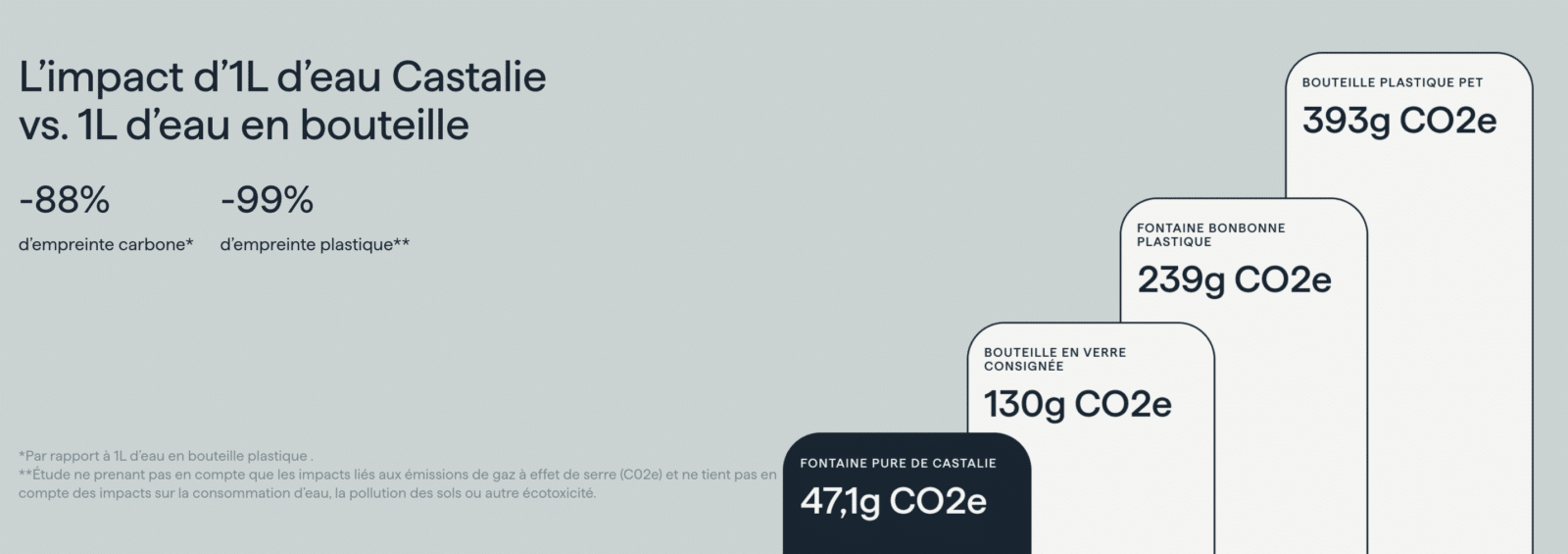
Find our 2023 Impact Report here.
Why switch to Castalie Solutions Castalie
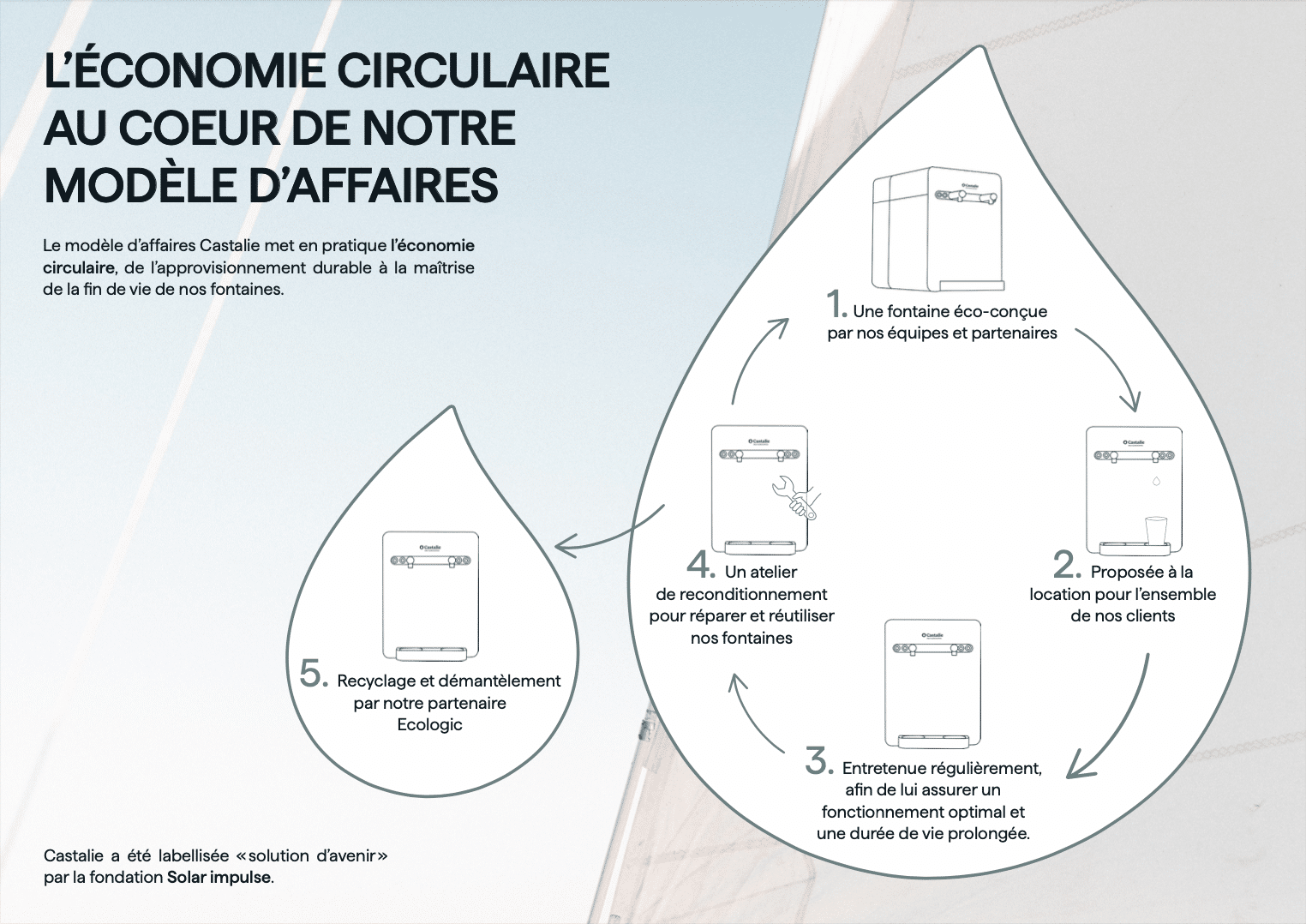
In addition to reducing plastic waste, Castalie water fountains fit perfectly into a circular economy approach. These fountains are designed to last thanks to a process of reconditioning and regular maintenance, which extends their lifespan and minimizes the need for additional resources. Each fountain installed can help avoid the consumption of several hundred thousand single-use paper cups or plastic bottles over its lifetime.
The economic benefits are also significant. Not only do companies reduce the costs associated with purchasing and managing bottles, but they also optimize their use of resources by choosing a sustainable and responsible solution. In addition, Castalie partners, such as hotels and restaurants, have seen a 70% reduction in their plastic waste, while offering their customers high-quality water.
Conclusion
In conclusion, while paper cups may seem like a "greener" alternative to plastic cups, their environmental impact remains significant when considering their entire life cycle. The real challenge is therefore not choosing between cardboard or plastic, but adopting reusable and sustainable solutions such as micro-filtered water fountains without bottles. Castalie an innovative solution that significantly reduces the carbon footprint of businesses and public spaces, while avoiding the massive use of single-use cups and bottles.
To discover how Castalie transform your approach to sustainable hydration, contact us today.
FAQ: Answers to Frequently Asked Questions
Are paper cups really environmentally friendly?
Although they are often perceived as a more environmentally friendly solution, paper cups usually contain a thin layer of plastic, making them difficult to recycle. In addition, their production requires a lot of water and energy.
Why are plastic cups so polluting?
Plastic cups are made from petroleum derivatives and are not very recyclable. Most of them end up in the oceans or landfills, where they can take hundreds of years to decompose.
What is Life Cycle Assessment (LCA)?
LCA is a method for assessing the environmental impact of a product at every stage of its life cycle, from the extraction of raw materials to the end of its life (recycling or landfill).
Are water coolers without bottles really more environmentally friendly?
Yes. They significantly reduce the use of disposable bottles and cups, while providing high-quality water filtered directly from the drinking water supply.
How Castalie to reducing plastic waste?
Thanks to its microfiltered water fountains, Castalie the need for single-use bottles and cups, thereby reducing plastic waste and companies' carbon footprint.