
Much more than a marketing tool, Corporate Social Responsibility is a comprehensive approach that enables companies to improvetheir social and environmental impact and commit to a sustainable development strategy.
Restaurant owners, who are business leaders in their own right, are also concerned with improving their social and environmental practices and have every interest in developing ambitious CSR strategies.
Repainting storefronts green? Making the entire menu vegan? Offering washable straws? How can truly sustainable practices be adopted? We break down the challenges and levers for making restaurants the showcases of tomorrow's food industry!
The CSR card to play in the restaurant industry

More and more of us are concerned about what we eat and are questioning the consumption patterns inherited from the post-war boom years. According to Agence Bio, 91% of French people want to see more organic, local, and homemade products in restaurants.
"I see the restaurant of 2050 as having a strong social and environmental impact, in complete harmony with the planet: with 9.7 billion people to feed, the restaurant industry has a real social and environmental responsibility," says Thierry Marx, Michelin-starred chef and activist, in an interview with AFP.
Finally, legal obligations, particularly those introduced by the Egalim law of 2018, are encouraging the sector to increasingly integrate CSR into their practices. For example, single-use plastic has been banned from sale since 2020 and doggy bags will be mandatory from July 1, 2021. The collection of used oils is mandatory and the recovery of bio-waste will soon be generalized to all restaurants.
To help you see things more clearly, the Food4Impact initiative offers a CSR assessment for your restaurant and support to guide you towards a responsible and healthy food offering, at no extra cost.
Restaurant owners, given the urgency of the situation, don't wait for the laws to change—take the lead by leveraging the following six levers!
6 ways to boost CSR in the restaurant industry
#1 Take care of your supplies 🥬
The way in which the food on your plate is produced is the first step towards a more sustainable restaurant: choose certified products (organic, biodynamic, Nature&Progrès, Label Rouge, AOP/IGP) or ask your suppliers directly about their production, farming, or fishing methods .
- Sourcing as directly as possible has many advantages. First, it guarantees that you will have seasonal produce with a significantly lower carbon footprint than off-season products. For example, a tomato grown in summer in an unheated greenhouse is 10 times less polluting than a tomato grown in a heated greenhouse in winter.
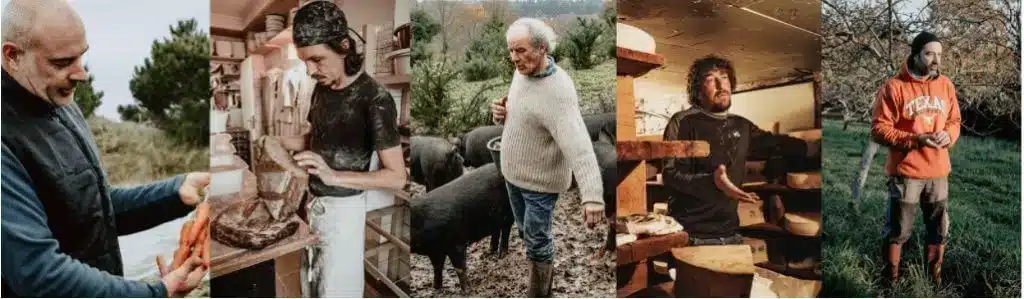
- Avoiding intermediaries also allows for better remuneration throughout the chain and preserves margins for both restaurateurs and producers. Finally, it guarantees greater transparency for customers and a privileged relationship with those who work the land on a daily basis. Victor Mercier, activist chef at the FIEF restaurant, has taken the bold step of offering only French ingredients on his restaurant's menu , where eco-responsibility is the watchword. Les Résistants, a restaurant that sources its produce directly from more than 250 producers met during a tour of France, is another inspiring example of sustainable sourcing.
💡 In short:
- Print and display the seasonal fruit and vegetable calendar in the kitchen.
- Ask your suppliers about the origin and production methods and demand high-quality production methods.
#2 Develop an eco-friendly and profitable menu 📝
Menus should be created in close collaboration with suppliers. The menu should be short and flexible to accommodate the vagaries of producers and seasons. Offering between two and four choices of starters, main courses, and desserts is a guarantee of product freshness, which customers value. Good practices to keep in mind include creating a dish of the day using priority products and using leftovers for staff meals.
To offset the additional cost of certified meat products, appeal to all guests, and reducethe carbon impact of your dishes, consider reducing the proportion of animal products and increasing the proportion of vegetables and legumes. Restaurant CASTALIE, La Table de Colette, and its chef Josselin Marie are a good example of 360°eco-responsibility!

💡 In short:
- Change the menu with the seasons while maintaining flexibility (opt for a chalkboard or loose-leaf menu rather than a fixed menu).
- Offer at least one vegetarian dish on the menu.
- Make the producers you work with and the labels of your ingredients (organic eggs and citrus fruits, for example) visible.
#3 Choose local and responsible water 💧
Water consumption has a significant impact on the environment, particularly due to its transportation and plastic packaging. That is why choosing a more environmentally friendly water is a solution that can be implemented as part of a CSR strategy. CASTALIE water fountains are an excellent way to offer responsible water at your tables, as they eliminate single-use bottles by providing microfiltered water produced directly at the point of consumption. High-quality water that is good for you and good for the planet!

💡 In short:
- Eliminate water transport and save storage space withmicrofiltered water on site.
- Eliminate plastic water bottles with CASTALIE water coolers CASTALIE
#4 Feed customers rather than trash cans 🙋🏻♀️

The best waste is the waste we don't produce, and this is as much an issue for your trash cans as it is for your cash flow! According to a study by ADEME and UMIH, waste in the restaurant industry represents 10% of the purchase price of raw materials, and 14% of food waste is attributable to the restaurant industry. To limit food waste, start by adjusting your portion sizes, buying the right amount, and using all of your ingredients. François Pasteau, former chef at L'Epi Dupin in Paris, has turned this constraint into an opportunity to develop his creativity by offering delicious anti-waste recipes based on vegetable tops and peelings, meat trimmings, and fish scraps.
💡 In short:
- Develop your creativity by using the products in their entirety
- Make the most of leftovers and potential waste with initiatives such as Too Good to Go or Phoenix.
#5 Doing your part to generate positive social impact 🤝
As part of a CSR policy, you can also carry out social and solidarity initiatives. This starts with adopting a caring management style for your teams, respecting time off and two consecutive days of rest, avoiding back-to-back breaks, and sharing added value fairly. Being an establishment that integrates people who are distant from the job market, such as La Table du Recho, or promoting the talents of refugee chefs through the Refugee Food Festival are other ways to put people back at the heart of your organization.
Choose ethicaldelivery through platforms such as RESTO.PARIS is another example of action that contributes to a virtuous cycle in the restaurant industry.
💡 In short:
- Employ people who are distant from the job market
- Adopt a caring and inclusive management style

#6 Communicate and highlight your commitment 🌎
Finally, don't hesitate to seek out certifications and labels, which are true guarantees of quality for your customers. For example, Ecotable evaluates and labels the most committed restaurants (according to three levels of eco-responsibility) through an environmental audit that provides a detailed analysis of restaurant practices. The Framheim label, meanwhile, rewards restaurants committed to reducing food waste.
Finally, your restaurant can be included on a map listing all organic and committed restaurants, an initiative of The Place To Bio. In short, if you have a CSR strategy, don't hesitate to communicate it!
💡 In short:
- Get certified or supported by a reputable, independent organization that promotes eco-friendly practices.
- Talk about your commitments on your communication channels (social media, business cards, website).
The restaurant of tomorrow is one that will take today's challenges into account, thanks to a comprehensive and ambitious CSR strategy. New expectations from diners for greater transparency, demand for plant-based options, respect for the seasons, kindness, and inclusion in team management: as Maïom explains, there are plenty of reasons for restaurants to go green!
Text: Laurène Petit
Credits:Ecotable - Malou Food Marketing,Ecotable - Lisa Streich,Michaelwb,Ecotable - Maud Argaïbi,Les Résistants,Caroline Attwood,David Holifield, Jay Wennington