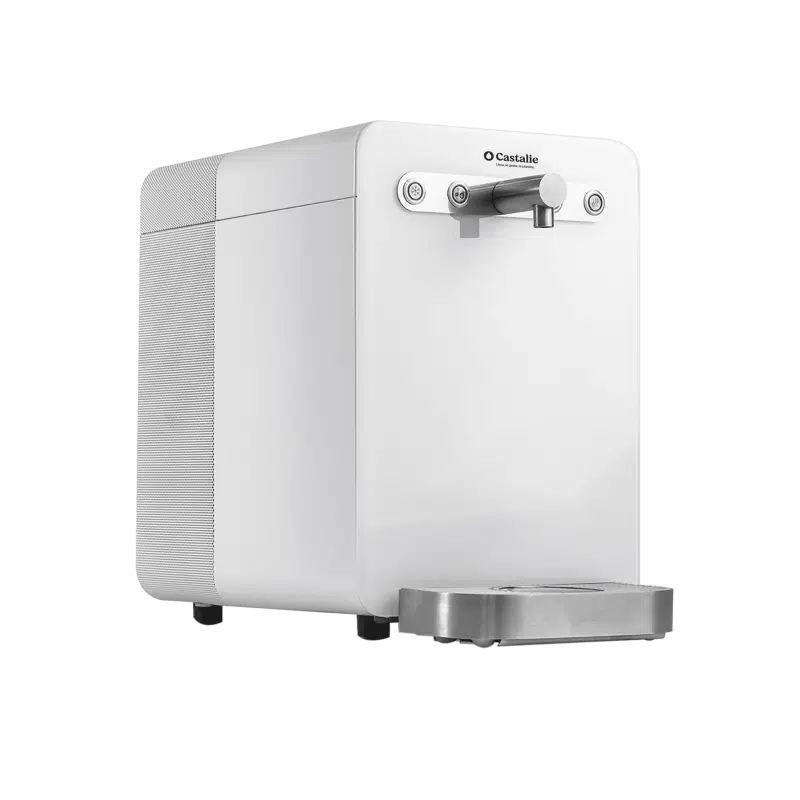
Faced with the climate emergency, the AGEC (Anti-Waste for a Circular Economy) law requires companies to rethink their consumption. But beyond the constraints, it paves the way for real levers for action.
At Castalie, we have been supporting organizations for over ten years in their transition to more responsible water consumption by offering local and sustainable alternatives to plastic bottles. It is with this in mind that we are collaborating with Comet, a company specializing in corporate events for 2 to 500 people, to fully integrate the requirements of the AGEC law into their daily practices.
In this article, you will find an explanation of the AGEC law, concrete solutions to implement, and inspiring feedback on how Comet has transformed a regulatory constraint into a lever for environmental innovation and collective performance.
To learn more and ensure immediate compliance, check out our comprehensive guide to the AGEC 2025 law for water in the office.
What is the AGEC law?
Enacted in February 2020, the Anti-Waste for a Circular Economy Act (AGEC) aims to transform our linear economic model (produce, consume, dispose) into a circular and responsible model. It is part of France's Climate Plan and introduces numerous obligations for businesses.
- Moving away from single-use plastic: phasing out single-use plastic packaging by 2040: the goal is to drastically reduce plastic pollution by gradually banning single-use items such as cups, cutlery, straws, and food packaging from the market.
- Mandatory environmental labeling on certain products: companies must inform consumers about the environmental impact of their products (CO₂ emissions, water consumption, recyclability, etc.). This is based on a system called "environmental labeling" or "eco-score," which has already been tested in the textile, electronics, and agri-food industries. The aim is to guide consumer choices and encourage brands to improve their environmental performance.
- Development of recycling and sorting-at-source channels: companies are required to organize more detailed sorting of their waste (paper, plastics, bio-waste) and to ensure that it is processed via approved channels, in accordance with the principles of the circular economy.
- Promotion of bulk goods and recycled materials: to limit unnecessary packaging and encourage the use of secondary resources, the law encourages bulk distribution, deposit systems, and the integration of recycled materials into products placed on the market.
Sources: Ministry of Ecological Transition, ADEME, service-public.fr.
Who does the AGEC law apply to?
The AGEC law applies to all economic actors, from SMEs to large corporations, and covers a wide range of sectors:
- Hospitality and catering: rethinking the use of single-use containers, particularly for takeaway sales;
- Offices and businesses: improving waste management and integrating sustainable products into their daily operations;
- Events: review practices in terms of procurement, logistics, and waste management.
- Public spaces: since January 2021, it has been prohibited to distribute plastic bottles in establishments open to the public (ERP). Since January 2022, it has also been mandatory for establishments open to the public with more than 300 people to have at least one drinking fountain accessible to the public.
Each sector has its own levers for action to comply with regulations while innovating. By integrating the requirements of the AGEC law today, organizations are showing that they are actively participating in the ecological transition. They are also strengthening their credibility, attracting customers who are sensitive to CSR issues, and anticipating regulatory changes.
Key figures from the AGEC law
- Reduction of household waste:
- Target of -15% by 2030 compared to 2010, i.e., 502 kg/capita.
- In 2021, production was still 611 kg per capita.
- End of single-use plastic packaging:
- Planned for 2040, with intermediate stages, including a 20% reduction in plastic packaging placed on the market by 2025.
- Reuse of packaging: Target of 5% in 2023 and 10% in 2027.
- Reduction in plastic bottles: Target of 50% by 2030 compared to 2015.
- Food waste: 50% reduction by 2025 in distribution and institutional catering, and by 2030 for consumption, production, processing, and commercial catering.
Sources: tc-e.fr, Zero Waste France.
Between obligations and opportunities
The AGEC law should not be viewed solely as a regulatory constraint. For businesses, it represents a real lever for transformation:
- Reduction in costs associated with the purchase of single-use consumables;
- Improved brand image among customers and employees;
- Easier access to certain calls for tenders that include CSR criteria;
- Greater internal mobilization around a sustainable project.
What are the practical alternatives?
Some solutions enable companies to go beyond simple compliance and tangibly improve their environmental impact:
- The use of micro-filtered water via connected fountains, to eliminate the use of plastic bottles;
- The use of reused office furniture is now encouraged by the AGEC law, which gradually requires20% of furniture purchases to be reconditioned or reused. Specialized companies such asFairspacecan assist you with these sustainable office design challenges.
- The selection of committed service providers for waste management, supplies, or catering.
[Case study] Comet: a measurable impact
Comet specializes in corporate events in stunning settings that are ideally equipped, designed, and thought out to promote creativity, collaboration, and well-being. With locations in Paris, Brussels, and Madrid, the company is transforming the traditional office environment with stylish, modular, and inspiring spaces that are available for evening, full-day, or half-day use.
Committed to greater sustainability, Comet has adopted a strong CSR approach in line with the objectives of the AGEC law. In 2018, it decided to eliminate single-use plastic bottles, replacing them with 51 Castalie water fountains installed throughout its premises—a simple but powerful gesture that reflects an ambitious and visible environmental strategy, recognized by ISO 20121 certification.
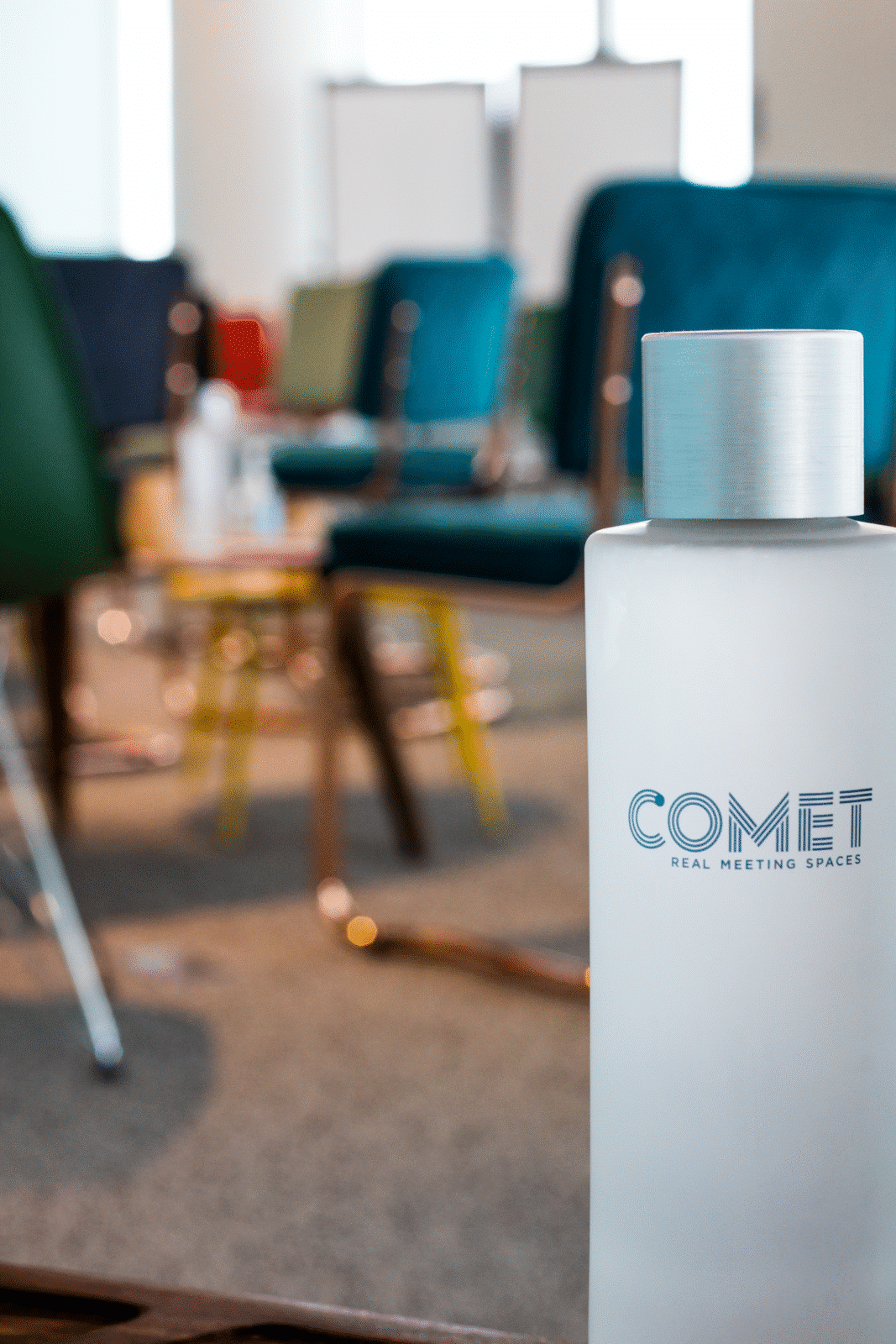
In addition to its commitment to reducing plastic use, Comet strives to limit its overall carbon footprint, notably through a responsible purchasing policy, committed partners, and raising customer awareness of more sustainable practices.
But Comet's commitment doesn't stop there:
- Vintage decor: Comet prioritizes reusing and repurposing objects to create unique and responsible decor.
- European-made furniture: The company favors furniture designed in Europe, thereby reducing the carbon footprint associated with transportation.
- French waste recycling: Comet ensures that most of its waste is recycled in France, supporting the local economy and guaranteeing optimal traceability.
- Promotion of craftsmanship: By collaborating with local artisans, Comet promotes traditional expertise and supports the circular economy.
These initiatives are part of a comprehensive approach, supported by partnerships with committed stakeholders. Comet is also B Corp certified, attesting to its commitment to the environment, society, and transparency.

In summary
The AGEC law is not a hindrance, but a driving force for forward-looking companies. By anticipating regulatory requirements and adopting innovative solutions, they enhance their appeal, performance, and positive impact.
You too can take action. Discover Castalie solutions Castalie sustainable hydration.
👉 Visit castalie.com