Plastic bottles are a scourge of greenhouse gas emissions, causing environmental and visual pollution for both individuals and businesses. However, there are concrete alternatives for reducing your carbon footprint in the office, notably by installing water fountains.
Why eliminate plastic water bottles?
In 2019, French people consumed 25 million plastic bottles every day (Source: OIEau). Most of these bottles are not recycled properly and end up in landfills or in the oceans.
Not all of them are biodegradable, and the micro- and nanoparticles released during their decomposition cause invisible pollution. It takes at least 450 years for a plastic bottle to disintegrate. Microplastics from bottles are found in our everyday lives. Plastic wears out, breaks down, and spreads into the environment: into bottled water, into the air, onto food, and even into our bodies.
What is the carbon footprint of a plastic water bottle?
The journey of a PET* bottle is long and polluting.
Upstream of consumption, the production and transport of these plastic bottles generate significant greenhouse gases, which are directly linked tocarbon footprints. On average, a plastic bottle travels 800 km between its source and its use. This includes oil extraction, energy-intensive manufacturing, transporting water over hundreds of kilometers, and end-of-life disposal, with only 10% of bottles actually being recycled in major French cities.
Which stage causes the most pollution? The production of the raw material, the plastic itself. Drilling, refining, polymerization, and then cooling require a lot of electricity to power the machines. The energy used is mainly from fossil fuels, which increases the environmental footprint.
The same applies to single-use glass bottles. Transportation and production remain the main sources of pollution. The problem is displaced but not eliminated.
*PET, or Polyethylene Terephthalate, is the most commonly used polymer for manufacturing plastic bottles and water coolers.
What are some sustainable alternatives to water bottles in the workplace?
Install a microfiltered water fountain
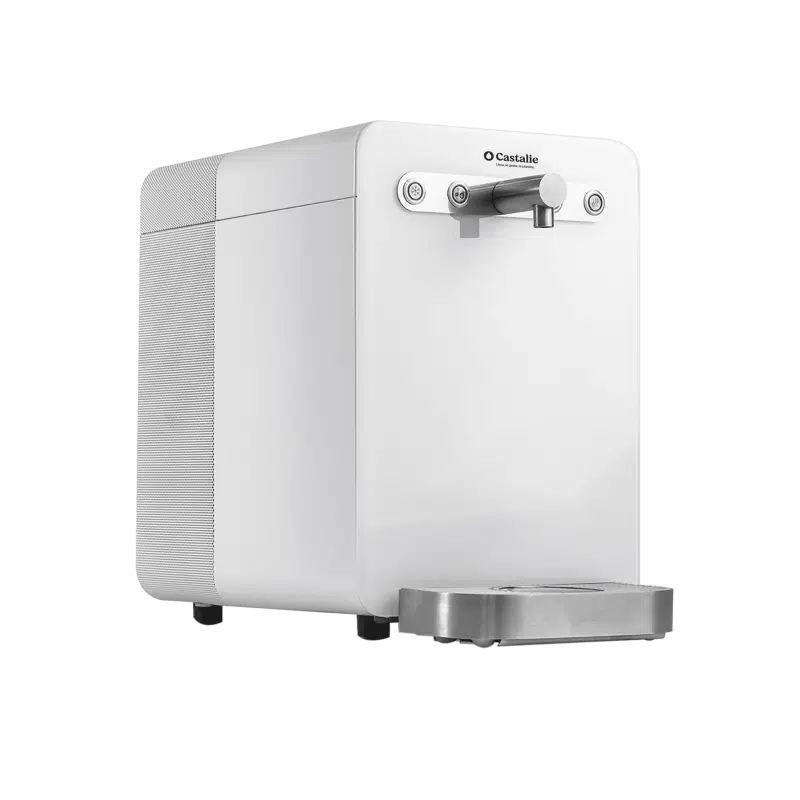
A microfiltered water fountain is the most effective solution for reducing your employees' plastic consumption. Connected to the mains water supply, it provides unlimited access to high-quality water. It offers a variety of options, such as cold water, sparkling water, still water, and hot water.
Opt for reusable water bottles
Providing water bottles is an effective way to reduce waste. No more plastic or paper cups—water bottles are a must-have. Opt for reusable accessories such as glasses and cups is part of an eco-responsible approach.
Prioritize glass water bottles in offices
In your meeting rooms or at events, replacing plastic water bottles with glass bottles reduces waste. Customized to your image and reusable, they create a hydration experience tailored to your company .
What are the advantages of a microfiltered water fountain?
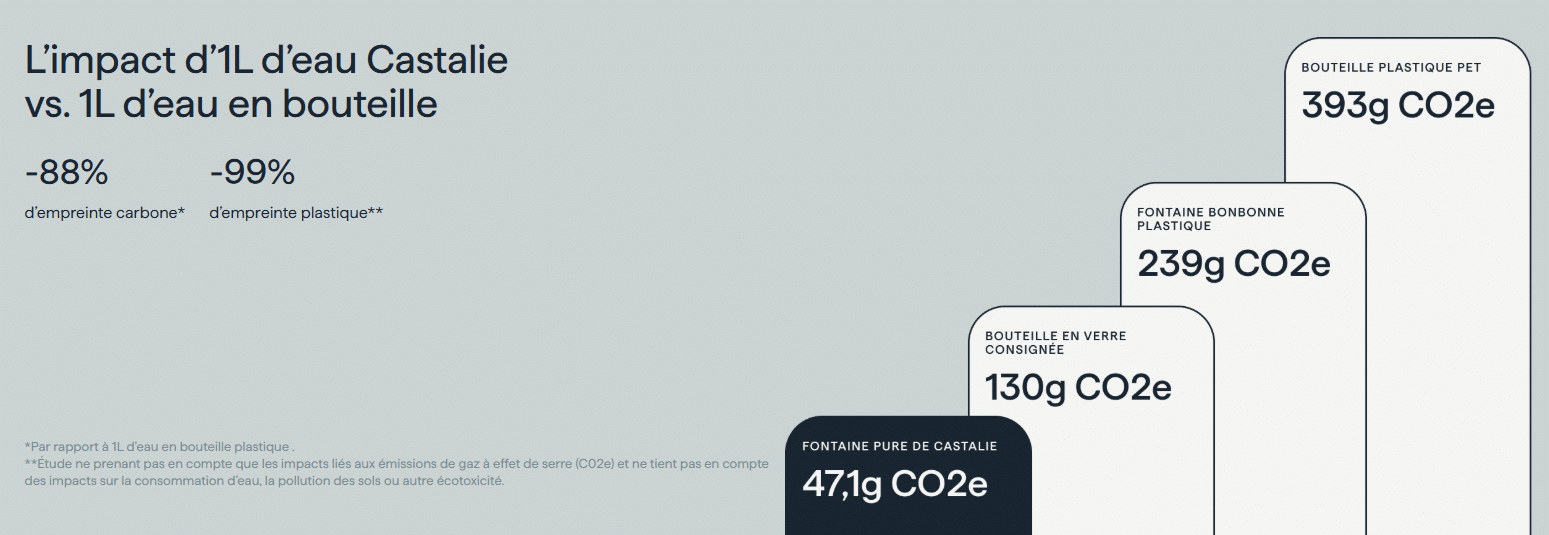
- Improve your company's carbon footprint: installing a Castalie microfiltered water fountain means 9 times fewer greenhouse gas emissions than plastic bottled water (Source: ACV Quantis 2023).
- Enjoy high-quality water that is pure and neutral in taste: designed with a microfiltration system, Castalie water coolers, Castalie example, guarantee pure water that is neutral in taste.
- Complying with new regulations: since 2021, the AGEC (Anti-Waste for a Circular Economy) law prohibits the free distribution of plastic bottles in establishments open to the public or in business premises with more than 300 employees.
- Enjoy a tailor-made solution: the design of a Castalie fountain Castalie into your space while allowing you to enjoy a fresh, sparkling, or hot hydration solution that meets your needs and desires.
Installing a microfiltered water fountain guarantees that you are offering an impeccable hydration solution, while also being part of a more responsible approach.
What is the point of removing water bottles from offices?
Optimizing inventory management
Whether they are plastic or glass water bottles or water coolers, they all have one thing in common: logistics. Storing and disposing of them requires careful organization. With unlimited access to water, networked water coolers eliminate the need for orders and free up storage space. Technicians check the coolers to ensure they are in good working order, guaranteeing consistent quality.
Affirming your CSR commitment
Eliminating plastic bottles and replacing them with a more responsible solution is the first visible step in a CSR commitment. Offering employees an alternative to plastic bottles, such as installing a water fountain, is a way to encourage them to adopt a more environmentally friendly approach.
Understanding and acting on your carbon footprint: beyond water
Reducing water bottles is a visible and impactful first step in your CSR approach. But how can you go further and measure your company's overall carbon footprint?
Why should you care about your company's carbon footprint?
The carbon footprint is a powerful diagnostic tool that allows you to:
- Identify precisely your main sources of greenhouse gas emissions:beyond water consumption, this includes transportation, energy consumption in your premises, your purchases of raw materials and services, etc.
- Define an effective reduction strategy:once the highest emitting areas have been identified, you can implement targeted actions for maximum impact.
- Enhance your brand image:communicating your carbon footprint and the actions you have taken to reduce it will make you more attractive to customers, partners, and future talent.
Carbon footprint: a requirement for certain companies
In France, certain organizations are required to conduct a Greenhouse Gas Emissions Assessment (BEGES). This applies in particular to:
- Companies with more than 500 employees.
- Public legal entities with more than 250 employees.
- The State, regions, departments, and municipalities with more than 50,000 inhabitants.
How can you assess your carbon footprint?
To calculate your carbon footprint, you have several options:
- Call on specialized consulting firms:they will assist you in collecting data and developing your action plan.
- Use recognized tools and methodologies:ADEME (the French Environment and Energy Management Agency) has developed the Bilan Carbone® method, which has become a benchmark in France.
This analysis provides a 360° view that allows us to go beyond symbolic actions and steer a genuine ecological transition.