Polluting, energy-intensive, and costly, plastic water bottles no longer have a place in modern offices. Between environmental responsibility and brand image, companies have every interest in rethinking their hydration systems. Several concrete and sustainable alternatives now exist to eliminate single-use bottles.
Why reduce water bottles in the workplace?
Each French person consumes around 180 to 220 plastic bottles per year, or roughly one bottle every two days (Source: Opinion Way). Behind this figure lies a reality: the majority of these bottles are thrown away after a single use, often without being properly recycled.
- Environmental impact: A plastic bottle takes up to 450 years to decompose, releasing microplastics into the environment (Source: UNDP 2025). Its production, based on petroleum, is extremely energy-intensive.
- Logistical and financial impact: Transporting, storing, and managing bottle waste generates significant operational costs and CO₂ emissions.
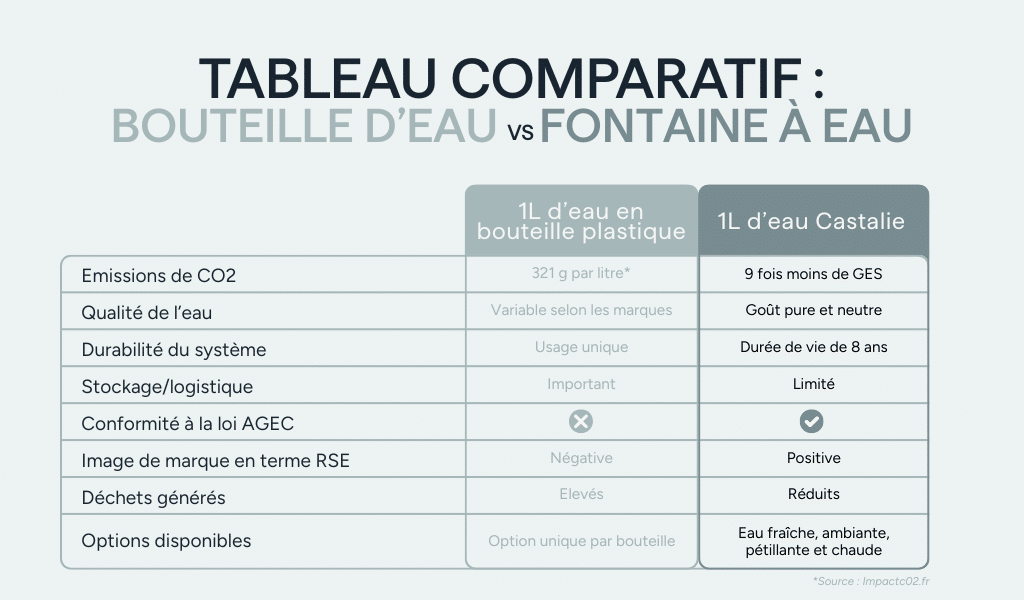
- Regulatory compliance: Since 2021, the AGEC (Anti-Waste for a Circular Economy) law prohibits the free distribution of plastic bottles in business premises open to the public. Compliance with this law is mandatory.
What are some eco-friendly alternatives to water bottles?
Install a microfiltered water fountain
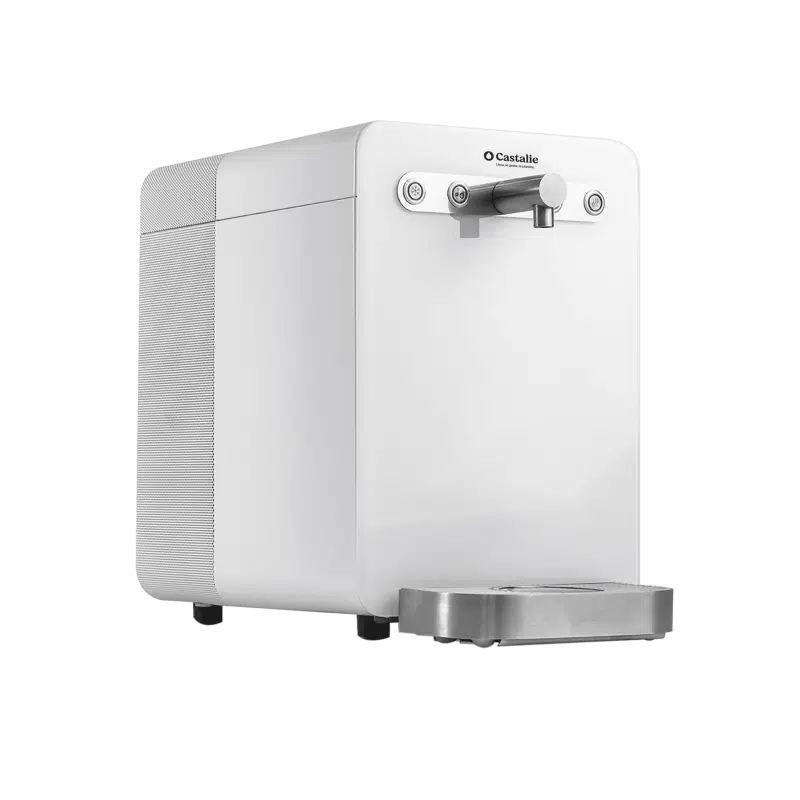
This is the most sustainable and economical solution. Microfiltered water coolers are now the most comprehensive solution for eliminating single-use plastic bottles in the workplace. Connected directly to the mains water supply, they provide pure, fresh, unlimited water while drastically reducing your carbon footprint.
A sustainable solution without logistics
Unlike water coolers or packs of bottles, networked water coolers require no transportation or storage. Water is filtered on demand, directly at the point of distribution.
What are the results of installing water fountains?
- Elimination of single-use plastic
- Little storage space required
- Reduction in transportation costs and associated CO₂ emissions
It is a turnkey installation that frees up time for logistics teams and contributes to the company's environmental performance.
High-quality water, pure and neutral in taste
Thanks to microfiltration, the fountain removes algae, limescale, PFAS, and metal residues from tap water, while preserving essential minerals. It is a purification process that removes particles, chlorine, and heavy metals, while preserving essential minerals.
It provides:
- High-quality water, fresh, at room temperature, still, sparkling, or hot
- Neutral taste
- Unlimited water
- A better hydration experience for employees
A visible and measurable CSR initiative
Installing a water fountain is more than just a practical choice: it is a concrete act of social responsibility.
Patricia Perrin, Sales Director at Espaces Diderot: “We chose Castalie embed our CSR commitment within our corporate policy. Castalie has also enabled Castalie to eliminate all plastic water bottles and free up space in our storage area.”
There are many benefits:
- 1 liter of Castalie water Castalie 9 times less greenhouse gas emissions than a plastic bottle (Source: Quantis 2023)
- Zero single-use plastic, in accordance with the AGEC law.
- A strengthened brand image
Use reusable containers
Providing each employee with a stainless steel or glass water bottle is an eco-friendly and symbolic gesture. It promotes sustainable habits and strengthens cohesion around an eco-responsible project.
In meeting rooms, providing water bottles branded with your company name encourages responsible hydration.
Use filter jugs or an osmosis system
These solutions are suitable for smaller organizations or specific uses.
- Filter jug: Simple and economical, it improves the taste of tap water. The vast majority of filter jugs on the market are ineffective at retaining PFAS.
- Osmosis system: This is a more advanced filtration system than microfiltration. An osmosis system purifies water using semi-permeable membranes for maximum purity, but it is more expensive.
Opt for returnable and refillable bottles
This system is based on the circular economy. Glass bottles are delivered, then collected empty to be cleaned and reused. This limits waste production but maintains transport logistics.
Comparison chart: bottled water vs. water cooler
Hydration, a lever for business transformation
The choice of hydration solution is not a minor detail. It is a powerful and visible lever for change. By eliminating single-use containers, a company not only reduces its carbon footprint; it sends a strong message to its employees, customers, and partners, affirming its commitment to a more responsible future.