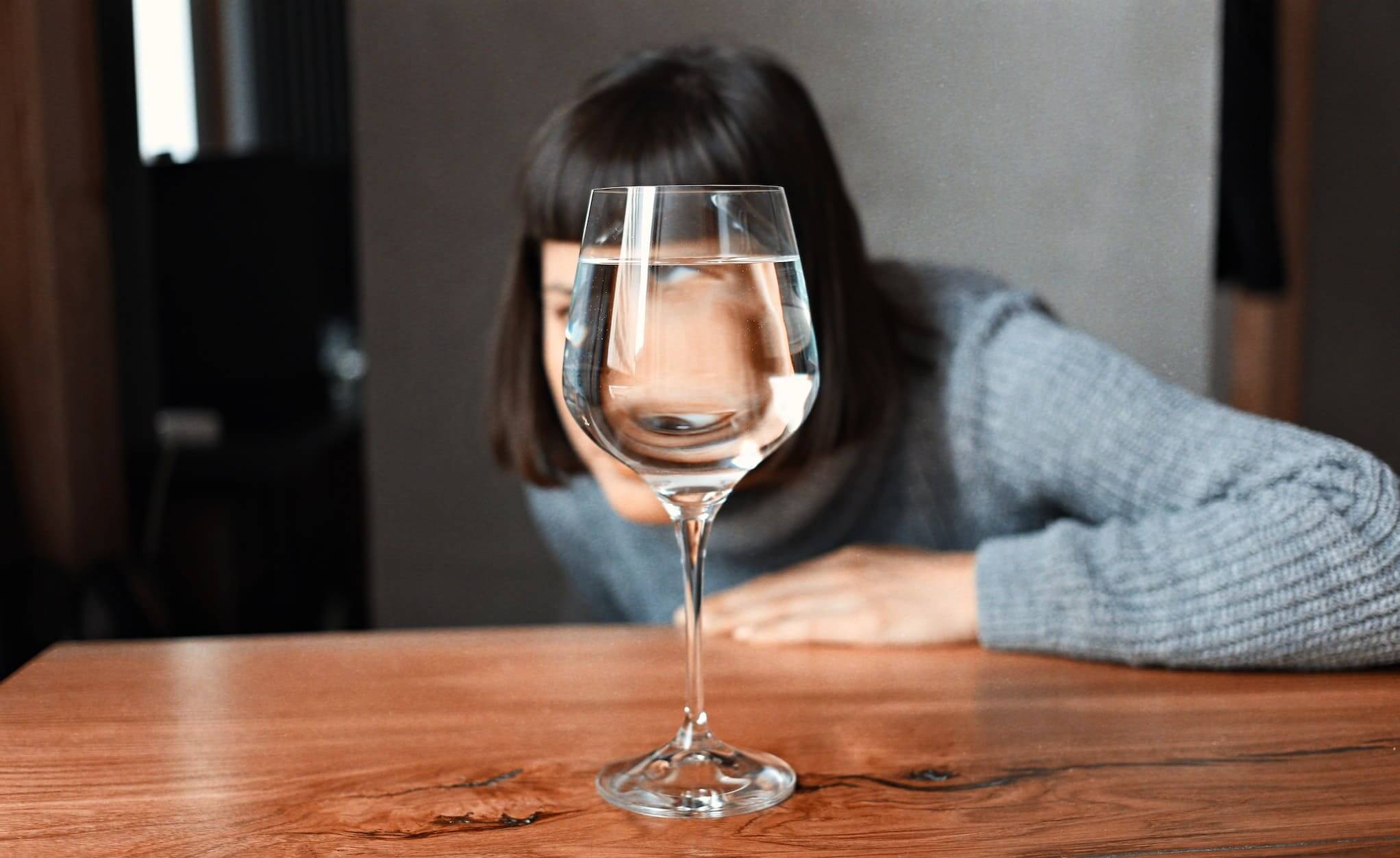
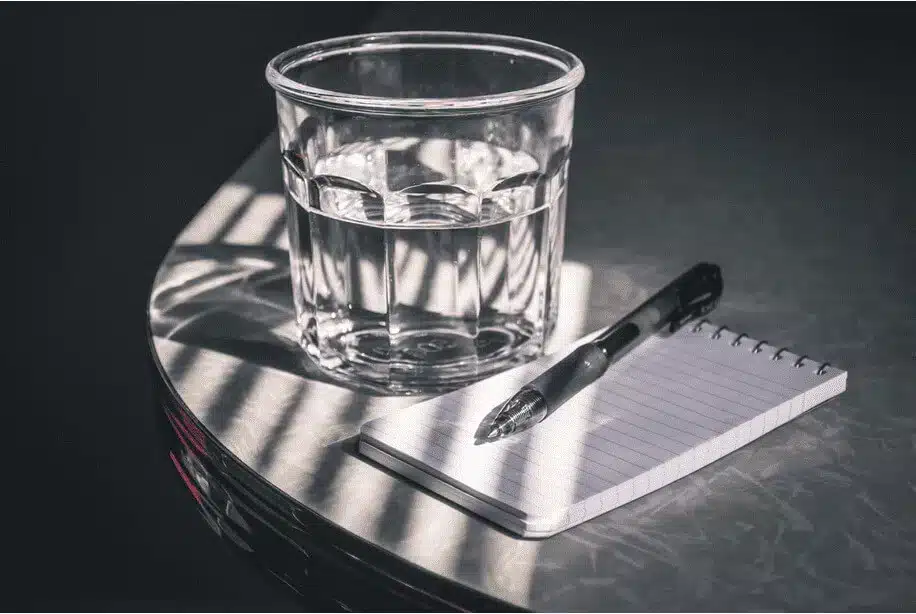
No, wine does not have a monopoly on the art of tasting!Eaunology, the "Dry January-compatible" version ofoenology, focuses on the organoleptic qualities of water, a drink that is so essential to life. Beyond the new trend of "water bars," "water grocery stores," and other fanciful marketing inventions, here are a few tips for tasting quality water. Note that for those of us who are less sober, these tips can also be useful for tasting wine, beer, or any other beverage. Want to become an expert in water tasting? Sharpen your senses, grab a notebook, and pour yourself a glass!
Just like wine, sensory analysis of water is based on the five senses:
The view 👁️
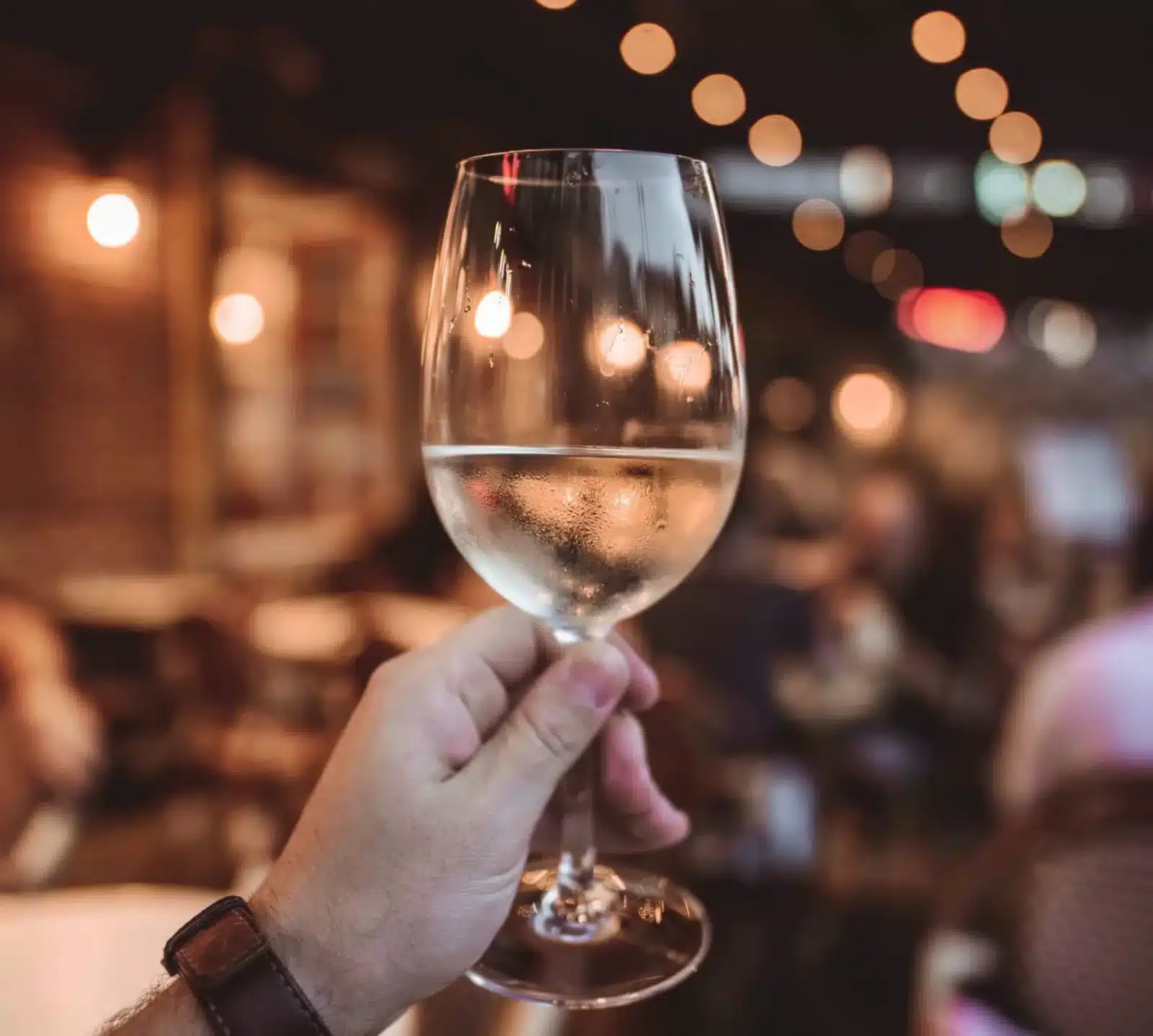
To avoid swimming in murky waters, keep your eyes open. The water should be perfectly clear, transparent, even luminous and sparkling. The meniscus, the line separating the air from the water, can give an indication of the texture: a thick line is a sign of water that is rather oily and long on the palate (it "coats the palate," according to oenologist and water specialist Renaud Jeanne) in a video for Doctissimo, while a thin line indicates " runnywater "with low persistence on the palate.
The sense of smell 👃🏾
A nose that is neither blocked nor affected by COVID-19 will be able to detect metallic, earthy, and even fruity and woody notes, depending on the water chosen. Ninety percent of taste perception comes from the retronasal or direct nasal passage (perceived by the nose) and only 10% from the taste buds: hence the importance of the nose in any tasting!
Hearing 👂🏼
Does the characteristic sound of opening a bottle of sparkling water appeal to the ASMR* enthusiasts among you? This sound is an indication of the level of fizz and the presence of bubbles.
Touch ✋🏿
On the palate, the texture of water can be perceived differently depending onthe intensity of the bubbles, but also on the temperature. In general, it is best to avoid very cold water: forget about ice cubes! Sommeliers such as Dominique Laporte, France's best sommelier in 2004 and inventor of the term "eaunologie," recommend drinking still water at room temperature (ideally around 14°C) and sparkling water at 10-12°C, to appreciate the bubbles without "breaking" them, as in the case of champagne. That's all there is to it!
The taste 👄
Water, like other foods and beverages, can be more or less acidic, bitter, sweet, or salty. For example, a high calcium content will give it a sweet, earthy taste, while sodium will give it a hint of iodine and sulfates will give it a slight bitterness. Magnesium, on the other hand, can give the illusion of aspicy taste.
Raphaël Bourguignon, project manager at CASTALIE, points out that "the H2O molecule has no taste by nature. Many elements subsequently give water its taste: minerals, the place where it is collected or through which it passes. At CASTALIE, we have chosen the most neutral taste possible." This neutrality ensures that it does not clash with the taste of the food it accompanies, resulting in water that does not distort the flavor of the dish or wine being consumed at the same time.
To betterappreciate it, to remember its value, or to best reveal the taste of the dishes and drinks that accompany it, water deserves as much (or almost as much) attention as wine! Let's not forget, however, that while it is good to consider the taste of water, it is a privilege to have access to high-quality, drinkable tap water at the turn of a tap.
* ASMR, which stands for "Autonomous Sensory Meridian Response," refers to the pleasant physical sensations caused by stimulation, often auditory, that generates well-being and relaxation.
Text: Laurène Petit
Credit (header): Milada Vigerova