Microfiltration, trace elements, water softeners... You thought you knew everything there was to know about water, but some terms still seem unclear? Never mind, after our guide to theSocial and Solidarity Economy, here is a short glossary ofwater-related vocabulary to help you become an expert onthis precious resource.
A is for ...
Salt water softener
A water softener, as its name suggests, makes water less "hard, " i.e., less calcareous. It is a device that is attached tothe water supply before it flows into household appliances and sanitary facilities. It consists of a resin tank that filters out the calcium and magnesium ions present in the water and replaces them with sodium ions through a chemical transformation. The water is thus "softened," i.e., stripped of its "hard" minerals, which cause limescale deposits.
However, if you decide to install a water softener, make sure you do your research beforehand to find out which model to buy, and don't hesitate to have it installed by a specialist to ensure that it is set up correctly.
Sanitation
The treatment ofwastewateris a process that involves collecting and treating water used by households, industry, or agriculture before releasing it back into the environment. This process takes place in three stages: wastewater collection,purification, and the release of "cleaned" water back into the natural environment.
In densely populated areas,sanitation is collective, meaning that wastewater is transported via a network of pipes to atreatmentplant: this is known as sewerage. In more sparsely populated areas, sanitation is carried out independently, using pre-treatment devices and the purifying power of the soil. In France, 79% of the population is connected to a sanitation network, according to the Service Public de l'Assainissement Francilien (SIAAP).
Once collected, the water undergoes "pre-treatment": it first passes through screens and sieves, which remove the largest debris (branches, plastic, etc.), then it is left to settle in basins to remove sand and gravel. Finally, it is degreased, i.e., oil is brought to the surface by injecting air so that it can be skimmed off and removed.
The actual treatment can then begin: the water is brought into contact with the sludge recovered by settling during pre-treatment. This sludge is loaded with bacteria, which feed on the polluting residues still present in the water. Once "cleaned," the water is returned to clarification tanks to settle, so that the sludge sinks to the bottom and can be removed.
Some treatment plants also use additional treatments to removenitrogen and phosphorus, particularly when the water is intended for swimming. Other smaller plants use lagooning or phytopurification techniques.
Once cleaned, the water is discharged into the natural environment. But be careful, even if 80-90% of the impurities have been removed, it is still not drinkable!
C for...
Ice cap
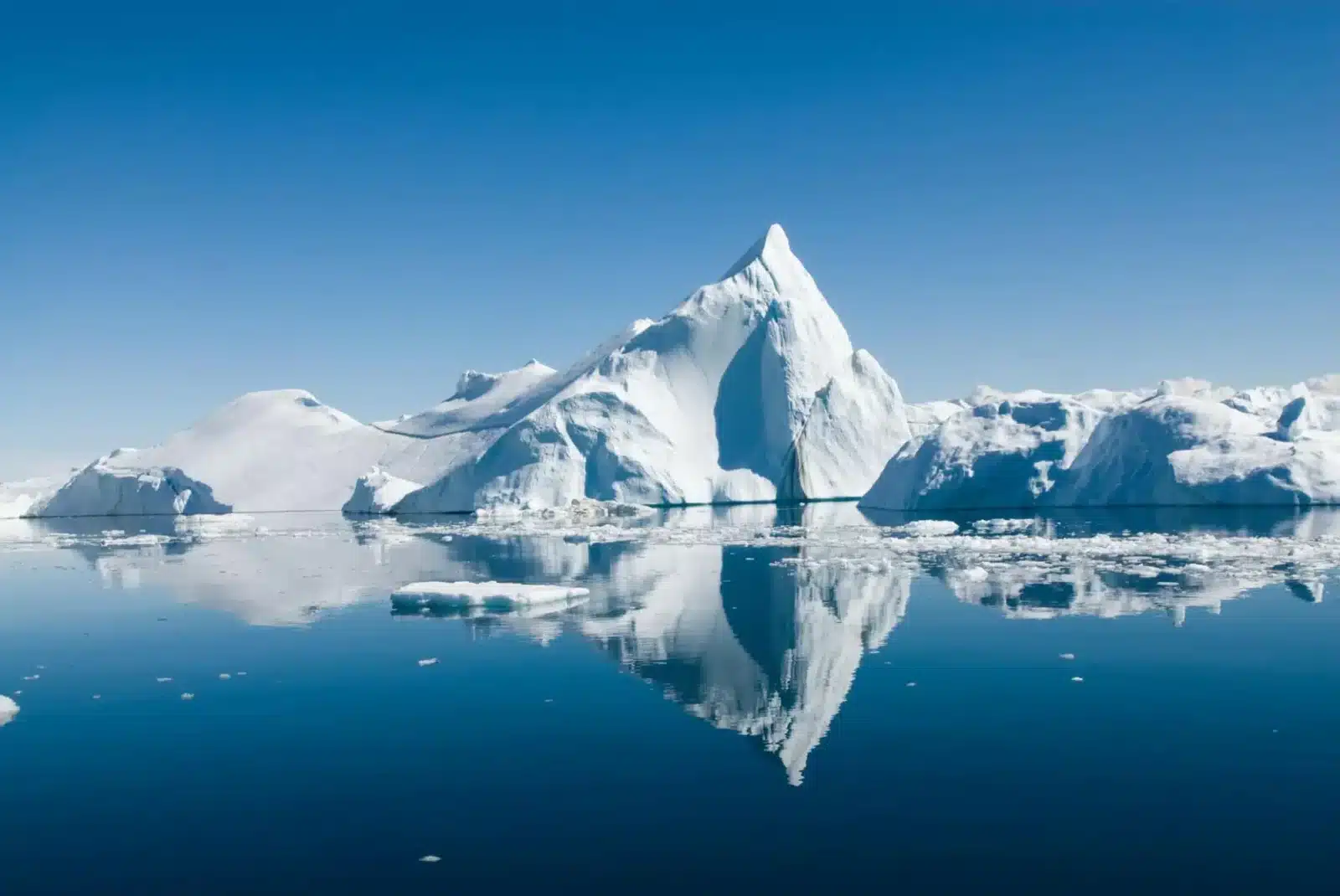
We often hear about"ice sheet melting,"but what exactly is it? An ice sheet is a vast freshwater glacier covering a bedrock surface. It forms as a result of accumulated snowfall, which piles up and turns into ice. This ice cap can be several hundred meters thick, and when it covers an area greater than 50,000 km², it is calledan"ice sheet." Today, there are two ice sheets, one in Greenland and the other in Antarctica.
Unlike sea ice, which forms on the sea when it freezes, ice caps form on rock and are made up of freshwater. Today, due to global warming, the Greenland ice sheet is melting at a rapid pace, causing sea levels to rise by more than 1 millimeter per year, according to a recent study published in the journal Nature. If global warming exceeds 2 degrees by 2100, the IPCC predicts that sea levels could rise by 43 cm... Hence the importance of slowing down the rise in temperatures as quickly as possible!
We often hear about"ice sheet melting,"but what exactly is it? An ice sheet is a vast freshwater glacier covering a rocky base. It forms as a result of accumulated snowfall, which piles up and turns into ice. This ice cap can be several hundred meters thick, and when it covers an area greater than 50,000 km2, it is calledan"ice sheet." Today, there are two ice sheets, one in Greenland and the other in Antarctica.
Unlike sea ice, which forms on the sea when it freezes, ice caps form on rock and are made up of freshwater. Today, due to global warming, the Greenland ice sheet is melting at a rapid pace, causing sea levels to rise by more than 1 millimeter per year, according to a recent study published in the journal Nature. If global warming exceeds 2 degrees by 2100, the IPCC predicts that sea levels could rise by 43 cm... Hence the importance of slowing down the rise in temperatures as quickly as possible!
D for ...
Demineralization
Demineralizing water means removing its minerals: calcium, chloride, sulfate, magnesium, sodium, etc. This water is also referred to as deionized water. Demineralized water is used in laboratories for industrial and scientific purposes, but also for ironing, to prevent limescale deposits on the iron, or for washing cars.
To demineralize water, anion exchange or membrane filtration process is generally used, which has the advantage of not using chemicals during the demineralization process.
So why not drink this water, you might ask? Quite simply because demineralized water has been stripped of all its minerals, as its name suggests, including those necessary for the proper functioning of our bodies. Consuming it regularly would therefore cause serious deficiencies. So we'll just pour it into our irons rather than down our throats!
Water hardness
This is what we were talking about when we mentioned watersofteners a few lines above! "Hard" water is water with a high concentration of calcium and magnesium. This hardness is measured in French degrees (°f): 1 French degree is equal to 4 mg of calcium or 2.4 mg of magnesium per liter of water. This measurement is called the hydrotimetric title. Water is considered moderately hard at 15°f and very hard above 30°f.
The hardness of water depends on the soil it has passed through before being collected for drinking: in very calcareous regions, the water will naturally be harder than in granitic regions, for example.
Using hard water is harmful to your household appliances, your pipes, and your consumption of household and hygiene products! Water with high calcium and magnesium content promotes limescale deposits and makes household and hygiene products less effective. It can even sometimes cause skin problems, such as eczema.
To find out the hardness of your water, you can contact your local town hall or take a look at your water bill: once a year, the Regional Health Agency (ARS) in your area includes a summary of water quality.
E for...
Drinking water
Drinking water is water that can be consumed without risk to human health. This definition is governed by law, in particular by the decree of January 11, 2007, which sets the standards and maximum levels that water intended for human consumption must not exceed. To be considered drinkable, water must meet around sixty criteria relating to its color, smell, content of undesirable substances, pH, etc.
Water taken from nature, known as "raw" water, with the exception of spring water, is not naturally drinkable. Even if the soil has filtered out some impurities, it still contains mineral and organic substances, some of which can be harmful to health. It must therefore bemade"potable" before being distributed.
To do this, water collected from boreholes or wells is sent to a production plant, where it passes through grids and screens before being decanted and filtered through sand. Next, invisible impurities are removed and the water is filtered again using activated carbon before being stabilized with chlorine. It then undergoes a final check by the water department before reaching our taps, and that's it!
Wastewater
Wastewater refers to water whose quality has been altered by humanactivity. There are three types of wastewater: domestic wastewater, industrial wastewater, and rainwater and runoff.
Domestic wastewater comes from household water, often containing detergents and solvents, or sewage, i.e., toilet waste.
Industrial wastewater can come fromfactories, agricultural discharges , etc.Its composition varies depending on the industry that discharged it, but it generally contains toxic products, heavy metals, solvents, and hydrocarbons.
Finally, rainwater becomes contaminated with residues when it comes into contact with the air or when it runs off roofs, roads, etc. It can be collected together with domestic wastewater or separately. In France, more than 93,000 kilometers of rainwater drainage pipes crisscross the landscape!
M for…
Microfiltration

A microfiltered is water that has passed through a filtration system, allowing residues of micron size to be retained. Generally, the membranes used for microfiltration is water that has passed through a filtration system, allowing residues of micron size to be retained. Generally, the membranes used for microfiltration have pores ranging in size from 0.1 to 10 microns, or 0.0001 to 0.01 millimeters. This allows for very precise filtration! This technique furtherpurifies drinking water once it has passed through our pipes, retaining any undesirable components and reducing the taste of chlorine.
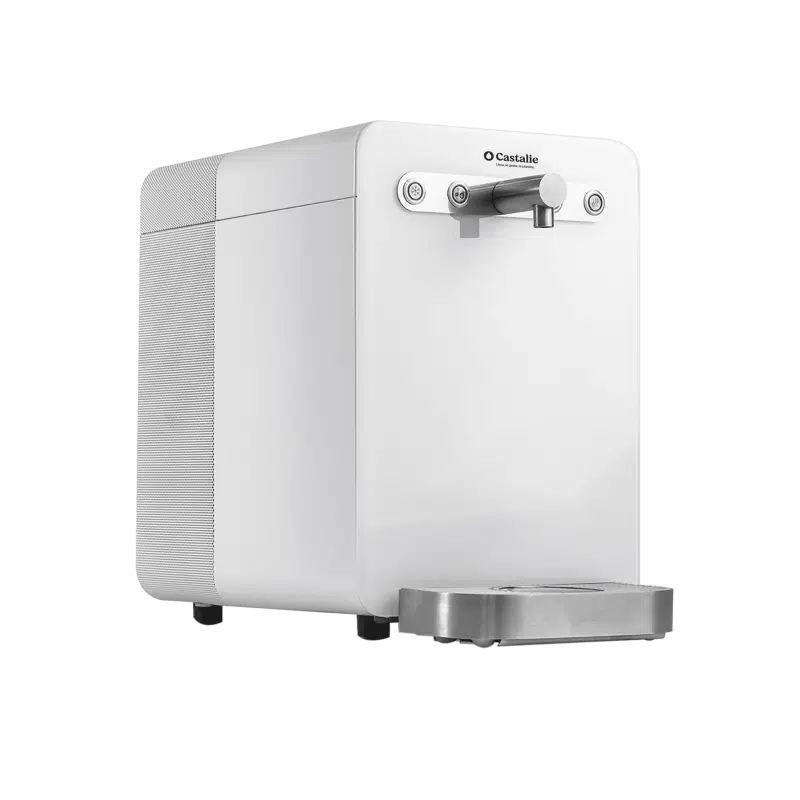
This is precisely what Castalie technology offers. CASTALIEtechnology, with its water fountain for businesses, hotels, and restaurants. This eliminates the need to consume bottled mineral water, as the water is microfiltered directly on site!
O as in ...
Trace elements
Trace elements are mineral nutrients that are necessary for the body to function properly, in very small quantities. There are essential trace elements, i.e. those whose absence or excess impairs the body's functioning, and non-essential trace elements.
Among the best-known essential trace elements areiodine, iron, and zinc. These molecules are found naturally infood and are normally provided in sufficient quantities, provided you have a varied diet. Some trace elements are also present in tapwater, in varying amounts depending on the quality of the water.
Trace elements have a wide variety of roles, but they are particularly involved in many enzymatic reactions, especially in digestion, the immune system, bone maintenance, the hormonal system, etc. In case of deficiency, certain trace elements are sold as dietary supplements, but it is essential to first consult a specialist to find out which ones we need!

Reverse osmosis
We can already see you frowning at this somewhat barbaric term, but rest assured, its meaning is much simpler than it seems. Reverseosmosis is a process used to filter water. This process is called "reverse" osmosis because normally, if two liquids of different concentrations are poured into the same container, separated only by a membrane, the less concentrated liquid will pass through the membrane to join the more concentrated liquid until the concentrations of the two solutions are balanced. This is calledosmosis.
If pressure is applied to the more concentrated solution, the effect is reversed: it will force its way through to join the less concentrated liquid, leaving its residues outside the membrane.
This process is known to be the most effective form of filtration, as the membrane retains 85 to 95% of residues, including viruses and bacteria. It is also popular because it is one of the few processes that does not use any chemicals.
On the other hand, it uses a large amountof water, since part of the water is rejected with the residues. Furthermore, while the membrane retains unwanted minerals, it also retains "good" minerals such as calcium and magnesium. This is why some specialists recommend adding mineral salts to osmosis water before consumption.
P for...
pH
Here's a term that should remind you of your middle school physics and chemistry classes (if you paid attention!). pH, which stands for Potential Hydrogen, is used to evaluatethe acidity oralkalinity of an aqueous solution by measuring its concentration of hydrogen ions. When the pH is below 7, the solution is said to be acidic; when it is above 7, it is said to be basic. The scale ranges from 0 to 14. Pure water at 25°C has a neutral pH, i.e., equal to 7. The natural pH of water depends on the soil: in a limestone environment, for example, the water will be rather basic.
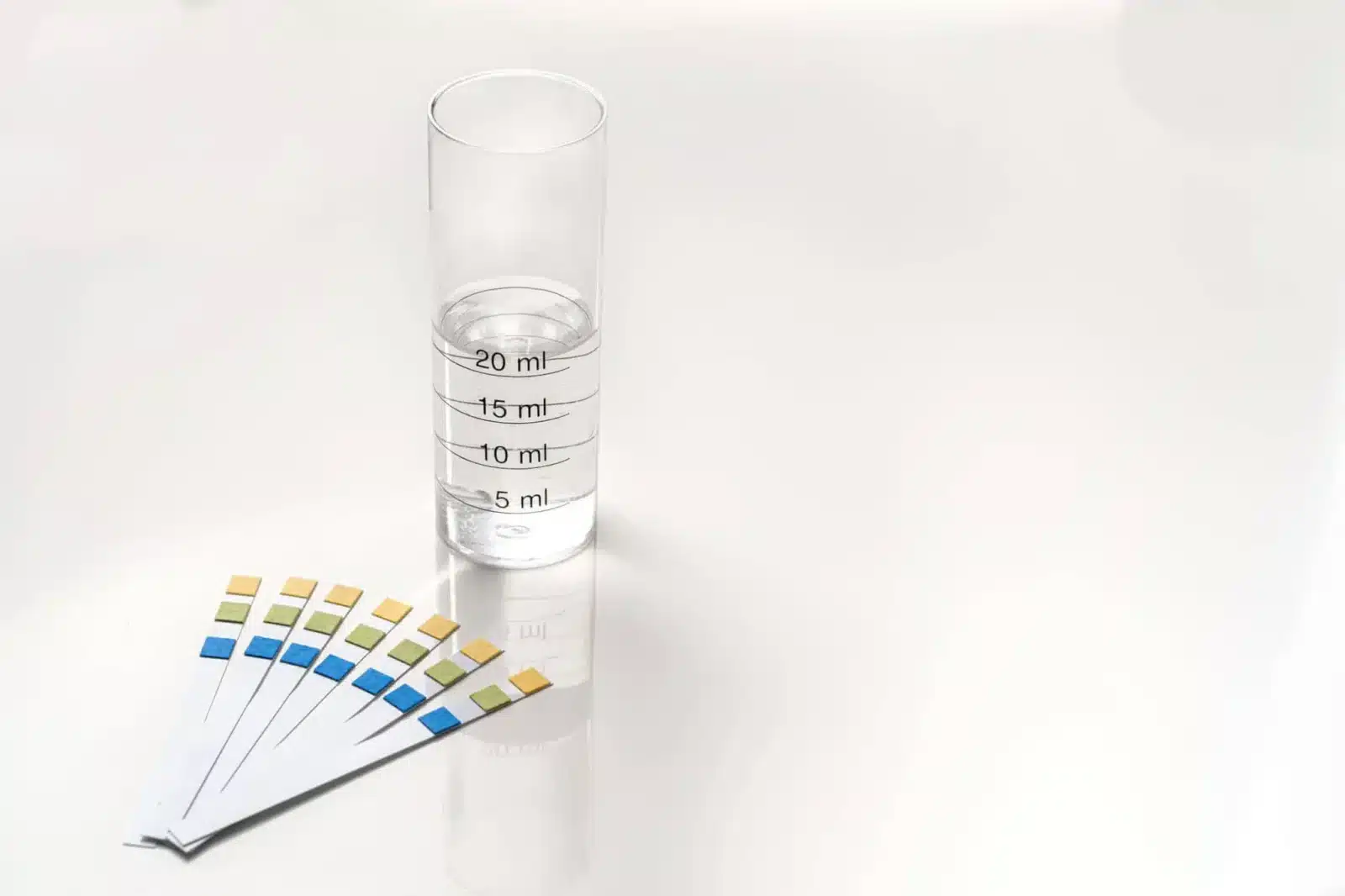
The recommended pH for drinking water is between 6.5 and 8.5. Water that is too acidic can be corrosive and damage pipes, and sometimes even release metal microparticles, which we then risk ingesting! Conversely, water that is too basic can be aggressive to skin tissue. To find out the pH of your tap water, you can contact your local council or consult the summary attached to your water bill once a year bythe ARS (Regional Health Agency). You can also measure it yourself using litmus paper, but the result will never be as accurate as a professional analysis.
S for ...
Mineral salts

Like trace elements, mineral salts are essential forthe body to function properly. They aremicronutrients derived from rocks, found naturally infood, particularly plant-based foods, as well as inwater. The best known are calcium, magnesium, iron, phosphorus, and sodium. They are present in fairly high quantities in the body, unlike trace elements, which are present in trace amounts.
Minerals play a role in cardiac activity, skin and hair maintenance, and blood circulation regulation. A varied and balanced diet normally covers your mineral requirements. You know what you have to do: eat five fruits and vegetables a day!
Text: Coline de Silans