There isn't a single day when we can do without water.
We use it at various times throughout the day: to wash ourselves, to cook, to clean, to flush the toilet... We can also take steps to save water as much as possible in our daily lives.
Today, we are focusing on the most obvious use: hydration and everything that comes with it! Because water is essential for life. Drinking is a reflex. But do you really know what the water you drink every day has in store for you?
Discover our guide to drinking water!
First, let's start with the basics: what is water?
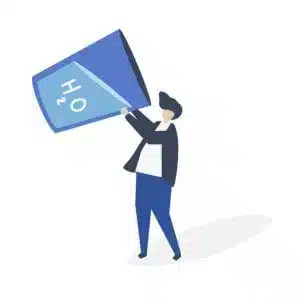
"H2O," you say? Let's take a quick trip back to our school days and physics and chemistry class... That's where we learned about this water molecule. You know, the one made up of two hydrogen atoms (H) and one oxygen atom (O). Although it seems ordinary because it is colorless, odorless, and tasteless, water is the true source of life on Earth.
When we look at our planet at the heart of the solar system, we realize that it is a huge blue sphere. You are probably familiar with its nickname, "Blue Planet." This is not surprising, given that water covers nearly 70% of its surface...
That's a good thing! Living beings are largely made up of water, which is essential for life.
But then, why drink water?
Quite simply because water is essential for our bodies. Drinking water is therefore vital for good health. Nutritional recommendations are to consume between 1.5 and 2 liters of water per day. These liters can be consumed in the form of water, hot and cold drinks, broths, soups, etc. But they are also provided by the food we eat, which covers about 20% of our water needs!
Our bodies are made up of 60% to 70% water, depending on each person's body type. This liquid occupies a huge part of the spaces that make up our bodies, both inside and outside our cells. For example, 80% of our brainsare made up of water, 30% of our bones, and 75% of our muscles...Impressive, isn't it?
After oxygen, water is the most important element for keeping us alive. There is even a saying that refers to the "rule of three." According to this rule, a human being can survive 30 days without food, 3 days without water, and only 3 minutes without air.

What does drinking water do for our bodies?
Water intake has important benefits for our bodies. In particular, it ensures that our organs function properly while supporting various vital processes:
- 💧 Maintaining blood volume in our bodies: water accounts for nearly 50% of our blood. It is therefore essential because blood carries all the oxygen our bodies need to produce energy.
- 💧 Food absorption: water helps maintain a certain level of fluid in the mouth. Saliva, of course, facilitates and ensures chewing and digestion.
- 💧 Regulating body temperature: our bodies have ways of protecting themselves to prevent their temperature from rising too high. The human body temperature is around 98.6°F. Above this, sweating helps regulate the temperature by allowing water to evaporate. Drinking is therefore essential to avoid losing too much water.
- 💧 Waste elimination: Located at the bottom of our back, the kidneys eliminate waste. Their role is to sort through the blood to determine what is useful to our body and what is not. Anything that is not useful is sent directly to the bladder to be eliminated via urine. Drinking regularly helps to renew the urine in our body.
- 💧 Skin hydration: By moisturizing regularly, our skin becomes stronger and more resistant to external aggressions. Well-hydrated skin will dry out less quickly and remain soft for longer.

When should you drink water?
Even before we feel thirsty, we are told! To stay hydrated, we have learned that it is important to drink between 1.5L and 2L of water per day. But of course, it would be too easy if this rule were applied and applicable to everyone. In fact, each person has different water needs! These needs vary depending on the person's weight and height, the climate, and even their lifestyle.
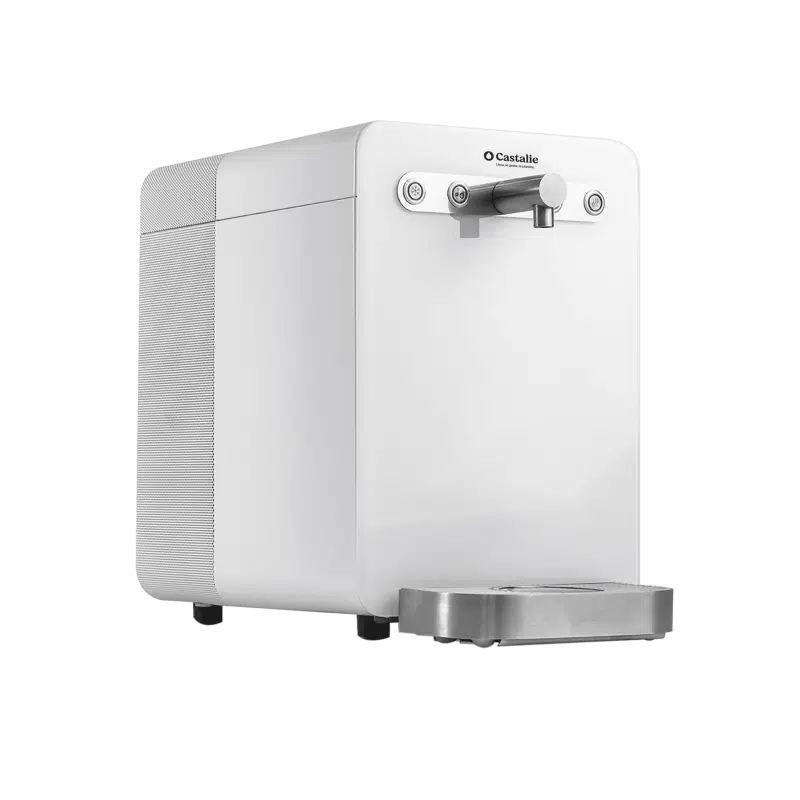
To stay hydrated, it is recommended that you drink between 6 and 9 glasses of water outside of meals. And where do we spend most of our day? Well... often at the office. Nowadays, we often find water coolers. And hey presto, with your favorite water bottle or mug, staying hydrated is a piece of cake!
It should also be noted that water loss can vary throughout the day. For example, hydration will be even more important in hot weather or during physical activity. The same applies during breastfeeding or in the event of illness.
Finally, drinking water when you wake up is a detoxifying habit that is particularly beneficial for your body. A glass of warm water will help kick-start your system as soon as you get out of bed. It's the perfect way to start the day with a fully awake body!
There are so many choices when it comes to water! So what are the different types of water?
There are several types of drinking water, all intended for consumption. There is a wide variety of choices for hydration. These include spring water, natural mineral water, sparkling water, tap water, and filtered water.
💦 Bottled water falls into two main categories: spring water and mineral water. Both come from underground aquifers located in different regions.Spring water undergoes no treatment and is bottled directly at the source, as its name suggests.
Mineral water must comply with specific standards regarding its mineral salt and trace element content. As with spring water, no treatment is permitted except for certain processes designed to remove undesirable or toxic elements of natural origin (such as fluoride, arsenic, iron, etc.).
Mineral water has a stable mineral salt composition, which is regularly checked and indicated on the label.
💦 Sparkling water is water that can be naturally carbonated, meaning that theCO2 contentof the bottled water is the same as when it emerges from the source, or enhanced with gas from the source if this gas is extracted and added to the water to obtain ahigher CO2 level. In both cases, the gas comes from the same source as the water.
As forcarbonated water,CO2 from a source other than the aquifer or deposit from which it originates is added. The gas is added during bottling, creating small bubbles. Of course, everything is carefully controlled and measured: not a drop out of place 😉!
💦 Tap water is strictly controlled in France. It comes from surface water (lakes, rivers) or groundwater. After extraction, it is treated, stored, and consumed. Coming from a water network known as public distribution, the water will be more or less hard (we'll talk about water hardness later in the article!) depending on the region.
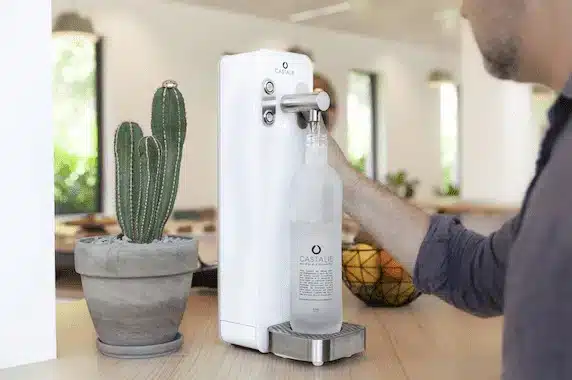
💦 Filtered water removes most of the chlorine and any microparticles found in tap water. Water can be filtered in various ways: using a water fountain, a filter jug, activated carbon, or ceramic beads. This method aims for zero waste and produces high-quality water that is neutral in taste and odor.
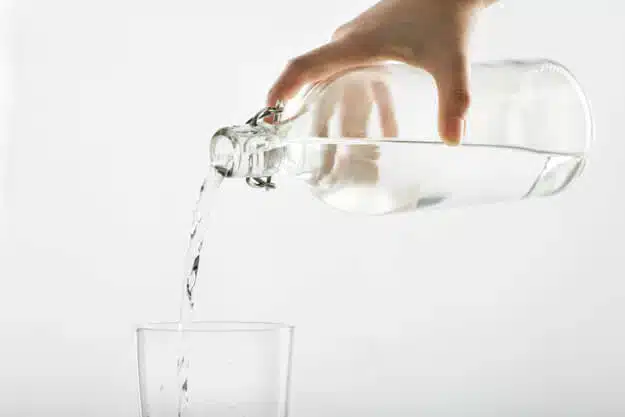
And tap water... Where does it come from?
This is indeed a very legitimate question that we have all asked ourselves at least once. In France, we are fortunate to be able to turn on the tap and have instant access to drinking water. Whether it comes from lakes, rivers, or groundwater, tap water can be drunk without harm because it is filtered and purified several times before consumption.
Water consumption is important for every French household. And not just for drinking, but also for various everyday tasks. Cooking, bathing, washing, laundry... For this reason, each citizen uses an average of 148 liters of tap water per day. That's a lot!
But where does all this water come from? After being collected on the surface or underground, the water is transported to plants to be filtered and purified. The result: the water is completely disinfected of any elements that may have found their way into it. A dose of chlorine is then added to prevent the potential growth of bacteria (better safe than sorry!). This dose is fully compliant with health standards and has no negative effect on health, even for heavy consumers of tap water (around 0.2 micrograms of chlorine per m3 in Paris), but the content may vary from one region to another depending on the composition of the water.
Once it is safe to drink, the water is stored in municipal water towers and distributed through a network of pipes. In large cities, the process is slightly different. In Paris, for example, tap water comes from five large reservoirs and 470 kilometers of aqueducts. These transport water from the Seine and other surrounding rivers.
After use, wastewater is collected, conveyed through sewerage networks, and sent to treatment plants: a continuous cycle!
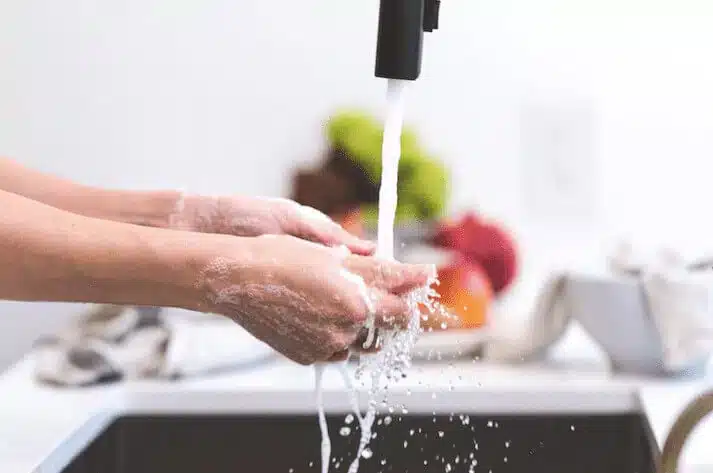
You can also filter tap water!
There are many benefits to filtering tap water, both for our health and for our planet. Here are a few:
- Although the vast majority of people trust tap water, one in three French people say they are not satisfied with its taste. They often find the water too chlorinated and too hard. This is where a water filter dispenser connected directly to the mains really comes into its own! 🚰
- In the kitchen, water is used in many everyday culinary preparations: rice, pasta, bread, coffee, to name but a few. We might as well enjoy water that is neutral in taste to preserve the flavor of our favorite dishes and drinks! 👩🍳
We were talking about water hardness. So what exactly is "hard water"?
It is possible to measure what is known as water hardness using an indicator called TH (hydro-metric title). This calculates the mineralization of the water, i.e., its calcium and magnesium content.
By definition, hard water contains a large amount of dissolved salts, particularly calcium salts that can turn into limescale. Hard water is therefore the opposite of soft water, which contains few calcium and magnesium salts.
In nature, not all water has the same properties. In the Vosges and Massif Central regions, for example, the water is very soft, unlike the water found in the Paris region.
However, there is no need to worry! Drinking hard water poses no risk to your health. The danger is more of a domestic one for our household appliances.
Hard water reduces the cleaning properties of our detergents and soaps, meaning that we need to use larger quantities. As for the limescale that can form, it will build up inside our pipes and on the walls of our hot water tanks or boilers.
So what exactly is limescale?
Limescale is generally something we hear bad things about in our homes. You know the kind: the stuff that damages our taps, leaves white streaks on our glasses, makes our laundry feel rough, and dries out our skin... In short, it's not necessarily something to brag about having in your home.
Where does it come from? That's a good question... It's important to know that the more calcareous water is said to be, the richer it is in magnesium and calcium, elements that are essential to our good health. This sedimentary rock is often found in nature in the form of white powder.
To reach our homes, water travels for several years and passes through different types of soil. This long journey takes the form of constantly repeating cycles: water is formed by absorbing mineral salts and trace elements to become the water that comes out of our taps... but also the water in bottles (mineral water)!
As we have seen, water is considered "hard" once it has passed through limestone soil. This is often the case with water from groundwater sources. To prevent damage to our household appliances, it is essential to treat hard water and therefore to detect it in our homes.
To effectively combat limescale, you can use a water softener. This device has a system that replaces calcium and magnesium ions with sodium ions before redistributing soft water throughout your home.An osmosis unit, on the other hand, removes them through successive filtration processes.
Now it's up to you to enjoy soft, pleasant laundry, soft skin, and sparkling dishes!
How can limescale deposits be prevented?
If we had to share a few tips to implement on a daily basis, they would be as follows:
- Set the temperature of the water heater and other household appliances to a maximum of 60°C. It is above this temperature that limescale deposits form more easily! 🔥
- Read the user manuals for your appliances to ensure they are working optimally. And don't forget to use anti-scale and anti-limescale filters... 📖
- Clean the walls of your shower with a squeegee to prevent water droplets and steam from accumulating and dirtying your bathroom. ✨
- Descale the hot water tank every year and clean the tap filters regularly. Use a toothbrush to remove any limescale buildup. 🚰
- Pour a mixture of white vinegar and coarse salt or lemon juice into the bottom of kettles, jugs, and other containers to remove limescale deposits. This will not affect the taste of the water and will quickly eliminate bacteria! 💧

Hot water, sparkling water, or carbonated water... what are their different benefits?
Hot water: 6 reasons to drink it!
Hot water has unexpected benefits. While we are advised to drink an average of 1.5 to 2 liters of water per day, what about its temperature? Drinking hot water has certain advantages that are not found in a glass of cold water.
Hot water stores a large amount of heat energy, which it transfers to our bodies. The impact of hot water on our bodies is therefore direct and powerful!
However, it should be noted that it is not advisable to drink water from your hot water tank. Always use cold tap water for drinking, cooking, and preparing hot drinks. It is better to heat water using a kettle, saucepan, or other coffee and tea making equipment.
Are you ready to discover the health benefits of hot water? Here they are!
NB: we haven't yet had the opportunity to explore these different benefits at CASTALIE here's what you can read here. Of course, never drink water when it's boiling! If you have any health problems, we recommend that you consult your doctor.
- Facilitate digestion and stimulate intestinal transit.
- Improve blood circulation to contribute to the proper functioning of muscles and the nervous system.
- Purify the body by raising its temperature to eliminate toxins. To boost this effect, adding a little squeezed lemon juice to hot water is a real detox bonus!
- Fight premature aging by eliminating these toxins. This will make our skin more elastic and allow it to regenerate, making it clearer and smoother.
- Relieve painful periods with its direct action on the abdominal muscles.
- Relieve coughs and sore throats by dissolving mucus in the nose and throat.
Sparkling water: why drink it?
As explained above, sparkling water is water that naturally contains carbon dioxide. This fizz can be recreated by adding gas to still water. The result is undeniable for bubble lovers...
When it comes to quenching your thirst, you're spoiled for choice: sparkling water or still water! With both, you'll be rewarded with that famous fizzwhen you open the bottle, the result of the depressurization that occurs when the bottle is opened.
Often rich in sodium bicarbonate, sparkling water is the ideal ally for combating certain ailments. These include digestive problems, constipation, and heartburn. Due to their high sulfate content, these carbonated waters also have laxative properties.
Finally, for athletes, sparkling water is considered more thirst-quenching. It is therefore highly appreciated and particularly recommended for reducing muscle fatigue and speeding up recovery. All this without any calories, so it can only be beneficial!

After hydration, let's talk about dehydration!
What is dehydration and what are its risks?
What is dehydration? It is the result of the gradual or almost total loss of water from our bodies, particularly from our tissues.
Hydration is essential for maintaining good health. However, dehydration is a serious problem that affects many people of all ages and backgrounds. It is not limited to infants and the elderly, even though these groups are the most vulnerable.
Dehydration can manifest itself in different ways:
- Intense thirst
- Dry mouth, tongue, and skin
- Transformation of the gaze: dull and empty
- Decreased urine output (called oliguria)
- Severe headaches
- Behavioral changes and/or disorders: agitation, extreme weakness, detachment, etc.
It should also be noted that, in more extreme cases, dehydration can cause brain dysfunction (such as coma) and have dramatic consequences. That is why these signs must be taken seriously and treated quickly.
Various studies have also shown that dehydration affects our physical and emotional abilities. How? A partial loss of body weight (specifically 1% of our weight in water) can affect our cognitive functions and mood. We then become prone to loss of attention and memory, and find it more difficult to communicate, perceive our environment, or learn...
How can you become dehydrated?
This state of dehydration can occur when water loss is excessive and not compensated for by daily intake. This is particularly the case during gastroenteritis with diarrhea and vomiting, or for people prone to chronic diseases (e.g., diabetes).
Excessive consumption of alcohol or laxative-type medications also has a diuretic effect. In other words, consuming these substances will lead to increased urine production and therefore force you to go to the bathroom more often, which will cause dehydration.
Finally, during periods of intense heat, as mentioned above, our bodies will implement mechanisms to protect themselves and prevent their temperature from rising too high. Above 37°C, perspiration will regulate body temperature and allow water to evaporate.
Be careful with intense and prolonged physical or professional activities (especially manual labor). Also be careful with episodes of fever, particularly in children and the elderly.
As you can see, water is a precious natural resource that is essential to life.
Our water takes care of us, so let's take care of it too!

Text: Marine Godet and Marie Veyrenc
Photo credits: Pexels and Freepik