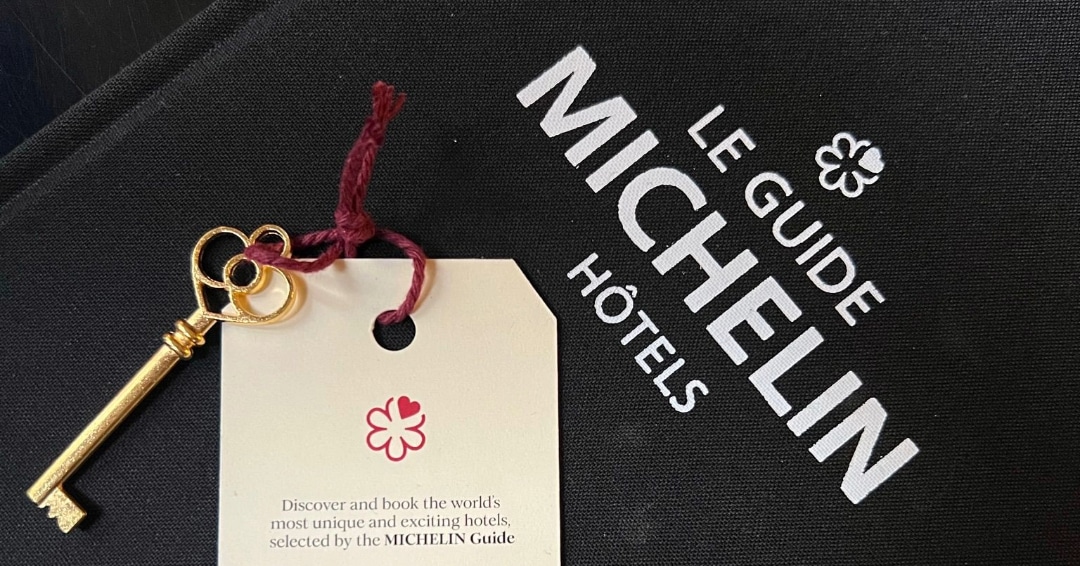
While the Michelin Guide has historically been the compass for foodies, it is now becoming the compass for travelers seeking unique hotel experiences. In 2024, the Guide unveiled its new distinction: the Michelin Key. This recognition celebrates not only comfort, but also a vision of hospitality.
At Castalie, we are proud to see that this vision resonates with that of our partners. From Paris to Courchevel, excellence is being reinvented by our clients who have earned this precious distinction.
What is a Michelin Key and how can I get one?
Just like Michelin stars for restaurants, hotel keys distinguish hotels that elevate hospitality to an art form. But how does one earn this distinction?
Where stars judge the food, the Keys evaluate the overall experience of the stay. It is an independent distinction that rewards establishments offering remarkable experiences. It does not depend on technical facilities (such as the classic hotel stars from 1 to 5), but on the emotion and overall quality of the customer experience.
The rating system is divided into three levels:
- 🗝️ A Key: A unique stay.
- 🗝️🗝️ Two Keys: An exceptional stay.
- 🗝️🗝️🗝️ Three Keys: An extraordinary stay.
To qualify for these keys, an establishment must excel in five uncompromising criteria established by the Guide's inspectors:
- Architecture and interior design: The place must have a soul, a striking aesthetic.
- Quality and consistency of service: The welcome, attention, and care given to customers must be flawless.
- Authentic personality and character: A hotel should not be standardized; it should tell its own unique story.
- Value for money: The experience offered must justify the customer's investment.
- A significant contribution to the local experience: The establishment must be a gateway to its destination.
It is therefore a holistic award, which values beauty as much as goodness, and above all, attention to detail.
What is the difference between a Michelin Star and a Michelin Key?
Although awarded by the same prestigious institution, these two distinctions judge different experiences.
- The Michelin Star rewards the restaurant: it focuses exclusively on what happens on the plate (quality of ingredients, cooking skills, chef's creativity).
- The Michelin Key rewards the hotel: it evaluates the overall experience of the stay, from the architecture to the service, including the comfort and personality of the place.
The two are complementary: an establishment can hold Clés for its exceptional hospitality while also housing a restaurant crownedwith stars for its gastronomy. This is the case for several Castalie clients, such as Le Cheval Blanc and Le Bristol, which excel in both areas.
Why is the partner ecosystem crucial for the Michelin Key?
Obtaining a Michelin Key is not solely dependent on the work of a team; it is the result of an ecosystem of partners of excellence. To meet the Guide's five criteria, hoteliers must rely on partners who are able to integrate seamlessly with their vision, whether they are architects, craftsmen, or service providers.
1. Enhance the design through detail
When it comes to aesthetics, every detail counts. Award-winning hotels work with interior designers to ensure that every object has its precise place. From the choice of fabrics for the bed linen to the porcelain on the table, nothing is left to chance.
The choice of glassware is part of this quest for visual harmony: replacing standard plastic bottles with reusable, elegant, and personalized glass bottles ensures perfect aesthetic continuity from the lobby to the guest room.
2. Strengthen local roots and environmental responsibility
The Guide values "contributions to the local experience." This encourages chefs and managers to favor short supply chains. This approach now extends to water. Promoting water from the local network by purifying it on site is part of the same philosophy as choosing a local market gardener: reducing the carbon footprint and celebrating the region, rather than importing products from far away.
3. Strive for service excellence
Consistency and quality of service are difficult criteria to maintain. To achieve this, hotels rely on partners who make life easier for their teams. Whether through technological concierge tools to personalize the welcome or by optimizing internal logistics, the goal is the same: to free up time. By eliminating low-value-added tasks (such as heavy lifting or complex inventory management), staff can devote themselves entirely to what really matters: customer care.
Castalie the sustainable detail that changes the customer experience
For these establishments, obtaining a Michelin Key means that every aspect of the customer experience has been carefully considered. From the architecture to the service, right down to the water served.
By choosing microfiltered water bottled on site, these award-winning hotels affirm that tomorrow's luxury is conscious luxury. They offer their guests pure, neutral-tasting water served in elegant containers that blend seamlessly with the aesthetics of their premises, while reducing their carbon footprint and logistics for their teams.
These Michelin-starred hotels place their trust in Castalie
Here are the distinguished establishments that have integrated our sustainable water solution into their overall approach to excellence:
- Cheval Blanc (Paris & Courchevel)
- The Bristol Paris
- Mandarin Oriental
- Lutetia Hotel
- Mrs. Dream
- Balzac Hotel Paris
- The Ballu
- Providence Hotel
Congratulations to them on this distinction, which highlights their unwavering commitment to an exceptional and sustainable lifestyle.
Are you aiming for excellence for your institution?
Like the hotels featured in the Michelin Guide, choose to install a microfiltered water fountain. Talk to our experts to design a tailor-made hydration solution that aligns with your CSR and aesthetic ambitions.