National Press: Le Parisien — Hauts-de-Seine (92) section · January 13, 2020 · Article by Estelle Dautry
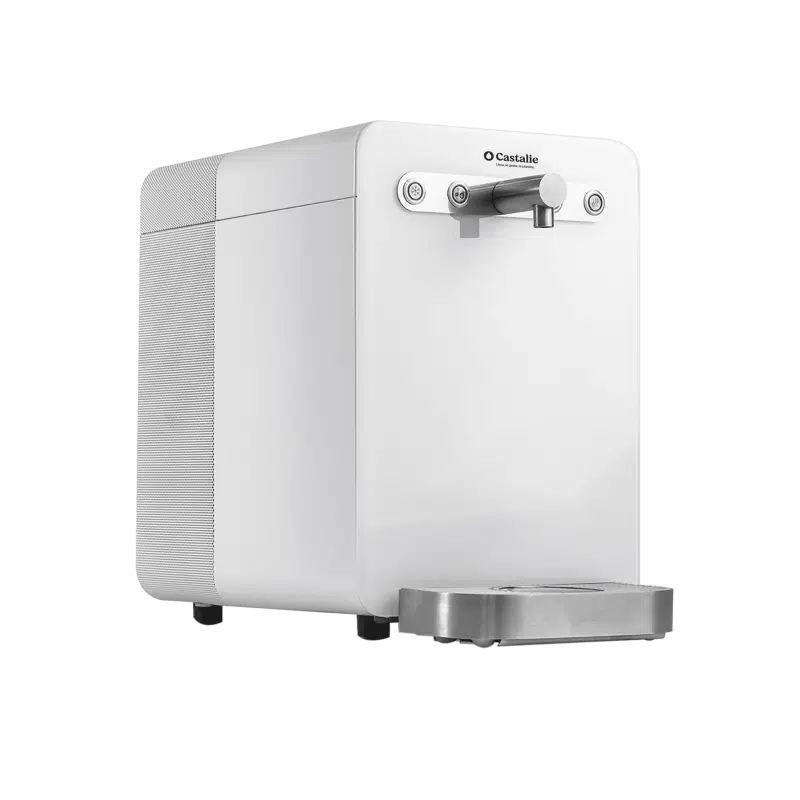
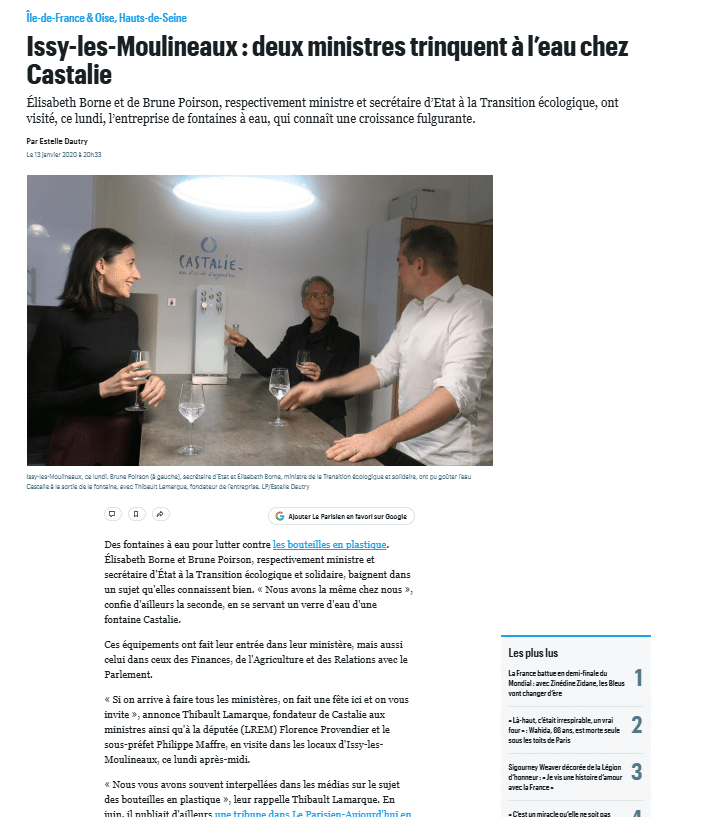
Le Parisien reports on the visit by Élisabeth Borne and Brune Poirson—Minister and Secretary of State for Ecological and Solidarity Transition, respectively—to Castalie offices Castalie Issy-les-Moulineaux. It was an opportunity for the founder, Thibault Lamarque, to highlight the growth of his microfiltered water fountain company, a few months before the anti-waste law takes effect. The visit highlights Castalie ’s commitment Castalie the ecological transition.
Key takeaways
- On January 13, 2020, Élisabeth Borne and Brune Poirson, Minister and Secretary of State for Ecological and Solidarity Transition, visited Castalie offices Castalie Issy-les-Moulineaux, accompanied by Member of Parliament Florence Provendier and Subprefect Philippe Maffre.
- As of early 2020, Castalie microfiltered water dispensers Castalie several French ministries—including the Ministry of Ecological Transition, the Ministry of Finance, the Ministry of Agriculture, and the Ministry of Relations with Parliament—a sign of their adoption at the highest levels of government.
- In the restaurant industry, Castalie some of the most prestigious restaurants in Paris, including the Pavillon Ledoyen, run by three-Michelin-starred chef Yannick Alléno, and the restaurant Le Jules-Verne, located on the second floor of the Eiffel Tower.
- On the corporate side, the rollout of Castalie late 2015 with an order for 50 water coolers from the LVMH Group, paving the way for the installation of these units at the headquarters of major corporations.
- In 2019, Castalie microfiltered water dispensers Castalie save 24 million plastic bottles by replacing bottled mineral water with filtered tap water served on-site.
- Founded in 2011, Castalie 65 employees in early 2020, up from 15 three years earlier—a period of rapid growth driven by stricter regulations on single-use plastics and the anti-waste law.
- Castalie with ESAT Yvonne-Wendling, located 300 meters from its facilities, where workers with disabilities assemble 100% of the filter kits and handle the repair and reconditioning of equipment—a central part of its circular economy model.
Source: Le Parisien, Hauts-de-Seine (92), January 13, 2020 — article by Estelle Dautry. Read the original article